Pentagon’s AutoWarCom puts drones, robots and AI under one four-star command
Pete Hegseth wants an Autonomous Warfare Command running by October 2027, while a 120-day study co-led by Elon Musk and Palmer Luckey decides which weapons come next — and ethics experts are uneasy.
On September 30, 2026, Defense Secretary Pete Hegseth announced AutoWarCom, a planned four-star command with service-like authorities to scale drones, robotics and AI across the U.S. military by October 2027. He also launched Project Meridian, a 120-day future-warfare study co-led by Elon Musk, Palmer Luckey and Newt Gingrich, which ethics experts say raises conflicts of interest.
For a decade, the U.S. military bought drones the way it buys almost everything: one service, one program office, one multi-year contract at a time. On September 30, Defense Secretary Pete Hegseth said that model is finished. Speaking to about 600 junior officers and senior enlisted troops at Marine Corps Base Quantico, he ordered the creation of a four-star Autonomous Warfare Command — AutoWarCom — to put drones, ground robots and military AI under a single headquarters with its own buying power. In the same speech he launched Project Meridian, a 120-day study of future warfare co-led by Elon Musk, Palmer Luckey and Newt Gingrich.
Together, the two moves amount to the Pentagon’s biggest organisational bet yet on autonomy. They also raise hard questions about who gets to decide what America builds next.
What did Hegseth actually announce?
Hegseth used his annual “State of the Force” address to lay out six initiatives, according to DroneXL. The headline item was AutoWarCom, a new command with what he called “service-like authorities built to scale autonomous and robotic capabilities across the joint force,” Breaking Defense reported. He described the change as “the fastest peacetime shift in modern military history.”
His case was about speed. “The pace of war is changing faster than the process to support it,” Hegseth said, per Military Times. He framed the goal as a “high-low mix”: keep buying expensive, exquisite platforms, but pair them with large numbers of cheaper autonomous systems that can be built, lost and replaced quickly.
The target date is October 1, 2027. If it happens, AutoWarCom would become the military’s 12th combatant command — the first new one since U.S. Space Command was re-established in 2019.
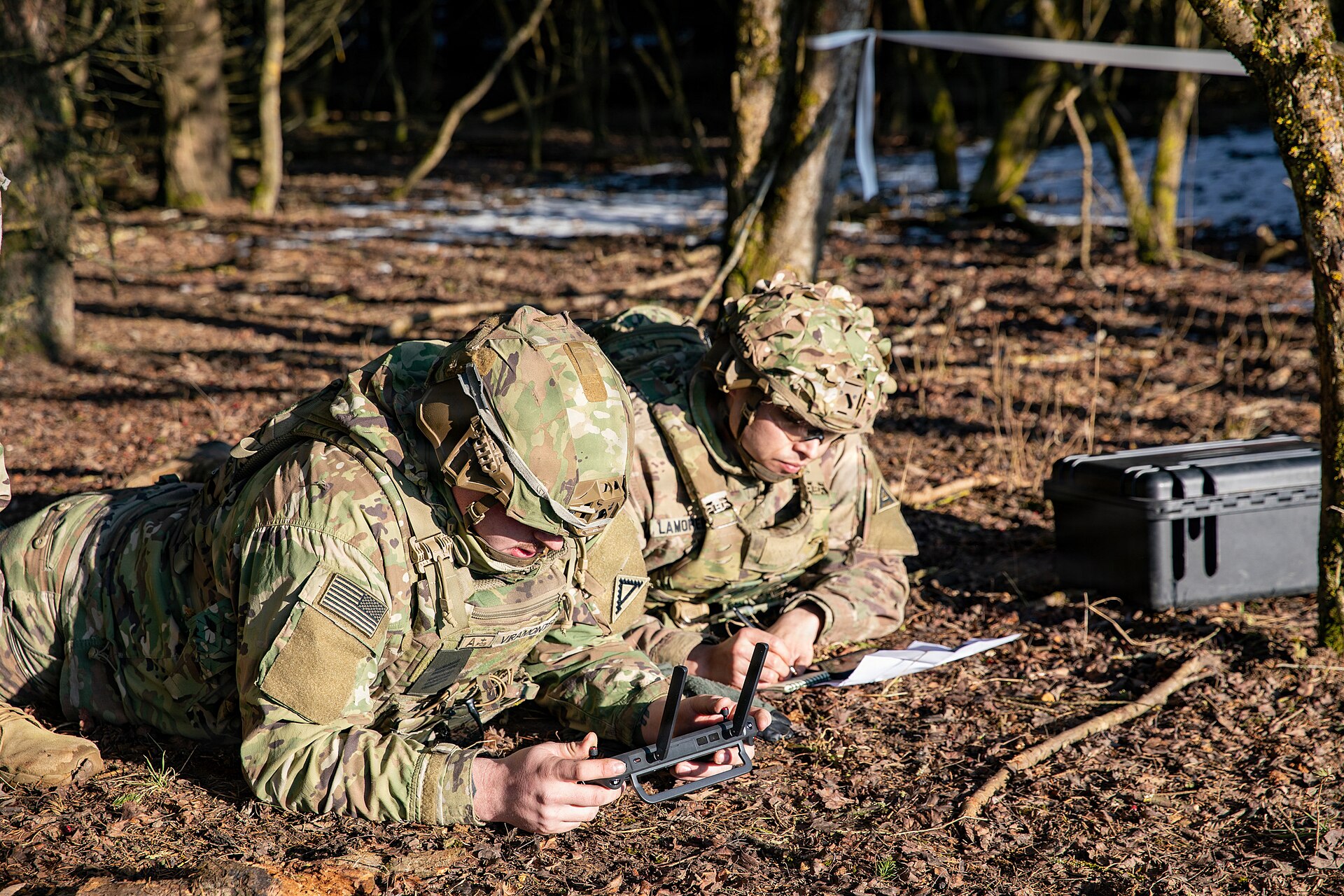 U.S. soldiers fly a small unmanned aircraft during the Drone Validation Course at the Joint Multinational Readiness Center in Hohenfels, Germany, in January 2026. U.S. Army photo by Spc. Adrian Greenwood, public domain, via Wikimedia Commons.
What does “service-like authorities” mean?
Most combatant commands, like U.S. Indo-Pacific Command, use forces that the Army, Navy, Air Force and Marines recruit, train and equip. They don’t buy much themselves. A handful are different. The War Zone compared AutoWarCom to U.S. Special Operations Command and U.S. Space Command — organisations that control their own money, people and, to varying degrees, their own acquisition.
That is the point. A drone command that can write its own requirements, run its own tests and sign its own contracts could, in theory, field a new quadcopter or counter-drone system in months rather than years. Hegseth also described dedicated career paths so that drone operators and autonomy specialists can be promoted inside the field rather than rotating out of it.
Who runs it before it exists?
The interim effort is called Project Agincourt — a nod to the 1415 battle in which English longbowmen, a cheap and massed technology, beat heavily armoured French knights. Hegseth named Owen West, director of the Defense Innovation Unit (DIU), and Navy SEAL Senior Chief Max Strasiser to lead it for a year in what he called a “CEO, COO partnership,” DefenseScoop reported. West focuses on strategic risk, resources and scale; Strasiser on operational problem-solving and how the systems are actually used in combat.
“This model fuses operators with entrepreneurs in rapid adaptation cycles while distributing decisions and dollars closer to frontline units,” Hegseth said, according to Military Times.
Agincourt sits inside the Direct Reporting Portfolio Manager for Unmanned Systems (DRPM-UxS), an office created in a June 2026 consolidation. Per DroneXL, it already oversees DIU, the counter-drone task force JIATF-401 and the Defense Autonomous Warfare Group. The memo gives the office 30 days — roughly until October 30 — to submit a plan of action and milestones with the Chairman of the Joint Chiefs.
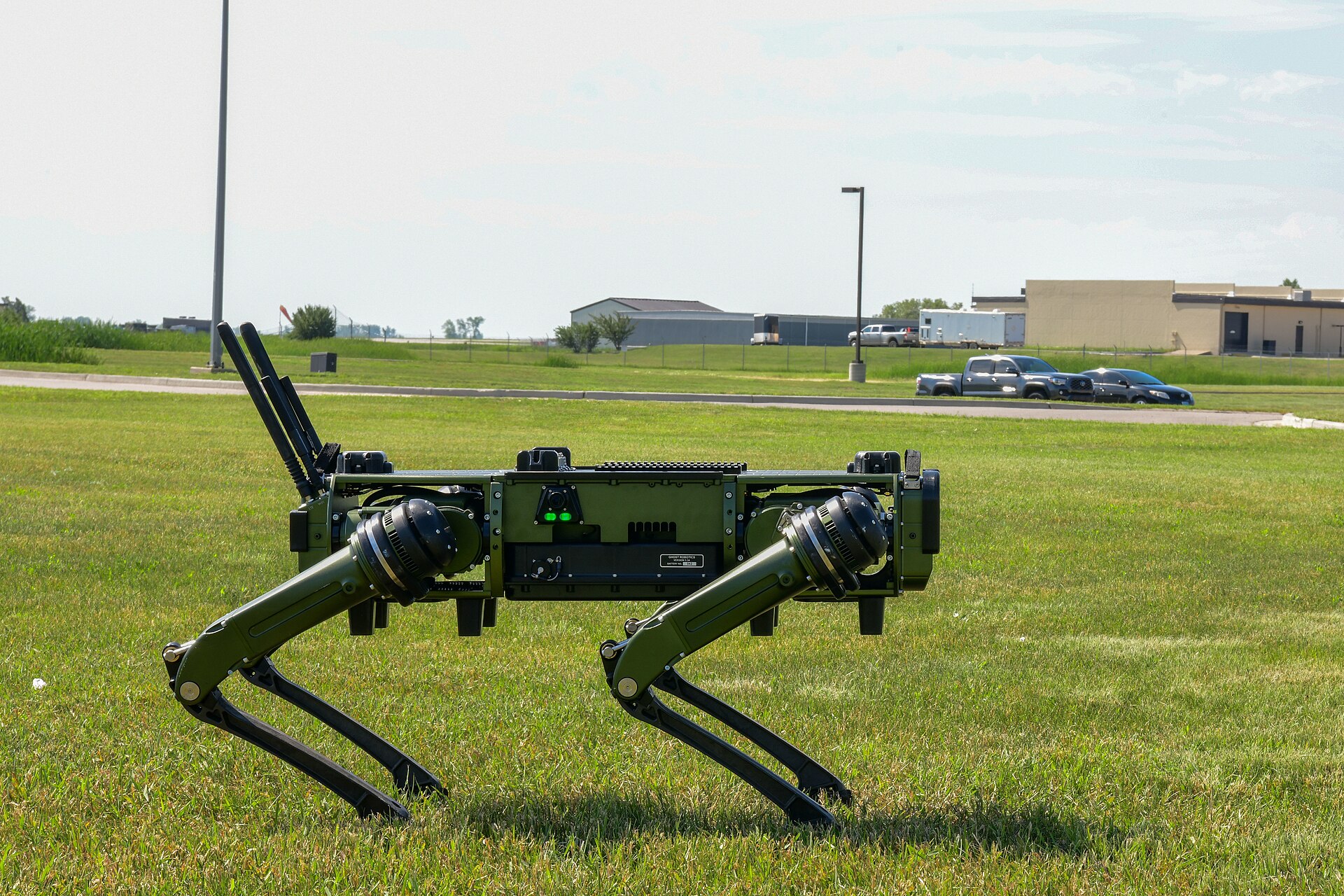 A Vision 60 “robot dog” used by the 5th Civil Engineer Squadron at Minot Air Force Base, North Dakota, in 2022. U.S. Air Force photo by Airman Alysa Knott, public domain, via Wikimedia Commons.
Can Hegseth create a combatant command on his own?
Not fully. The memo names no commander, sets no budget, headcount or headquarters, and the command needs a law Congress hasn’t passed, DroneXL noted. There is some momentum on Capitol Hill: the Senate Armed Services Committee’s fiscal 2027 defense bill, approved 18–9 in June, would create a four-star Robotic and Autonomous Systems Combatant Command. But that version gives it test-and-evaluation powers and only limited acquisition authority — narrower than what Hegseth described.
The money is moving faster than the org chart. The fiscal 2027 request seeks about $75 billion across drones and counter-drone work, according to DroneXL, inside a broader $1.5 trillion defense plan and a proposed $350 billion reconciliation package, per The War Zone. The Pentagon’s Drone Dominance effort shows both the ambition and the friction: of 22,320 drones due from its first “Gauntlet” buy, 13,440 — about 60% — had been delivered by August 25, DroneXL reported.
Congress is also not in a cooperative mood. In the same speech Hegseth said the department had fired 10% of generals and admirals and would cut general-officer slots by another 10%. Sen. Jack Reed called the moves “reckless, partisan actions,” Breaking Defense reported.
What is Project Meridian?
Project Meridian: The Future of Warfare is a study meant to “identify the domains that we must conquer, and capabilities we must master,” Hegseth said, per The Next Web. It spans every domain “from subterranean depths to the cislunar frontier,” and names AI, autonomy, directed energy, robotics and biotechnology as the fields that will change how wars are fought.
Pentagon Chief Technology Officer Emil Michael is overseeing it, with Musk (SpaceX, Tesla), Luckey (co-founder of Anduril) and former House Speaker Gingrich as co-directors, supported by academic, policy and industry experts. The work is commissioned through MITRE, the federally funded research nonprofit. Findings are due January 28, 2027, as an unclassified public report with a classified annex.
Why are ethics experts worried?
Because the people mapping future demand also sell to the customer. Both Musk and Luckey run companies with billions of dollars in defense contracts, and the study could shape which munitions and autonomous systems the U.S. buys, NPR reported. SpaceX alone has received more than $8 billion in U.S. defense contracts in 2026, per NPR.
The key unanswered question is status. Executive-branch employees, including special government employees, are bound by a federal criminal law that bars them from decisions affecting their own financial interests. Contractors are not. The Pentagon did not tell NPR which category Musk and Luckey fall into. “It’s a massive conflict of interest,” a former senior Defense Department official told the outlet. Richard Painter, a former White House ethics lawyer, put it more bluntly: “They all want to sell stuff.”
The department’s answer is process. “MITRE is responsible for the analysis and recommendations, and will evaluate all inputs with technical rigor while applying appropriate conflict-of-interest and information safeguards,” a spokesperson told NPR. Days after the announcement, CNBC reported that Anduril landed a $2.9 billion Navy submarine shipyard contract.
What it means for builders
For defense-tech founders, the direction is unambiguous: more money, fewer gatekeepers and a buyer that wants volume. A command with its own acquisition authority and leaders drawn from DIU is likely to favour fast pilots, commercial components and software-defined systems — autonomy stacks, swarm coordination, counter-drone sensing and cheap, attritable hardware.
But the guardrails are still being written. The Pentagon’s policy on autonomy in weapon systems, DoD Directive 3000.09, was last updated in 2023, and neither announcement, as reported, addressed it. Internationally, pressure runs the other way: the UN’s human rights chief has called for a ban on AI making life-or-death decisions, as we covered in Washington’s voluntary AI safety accord and the UN’s push for binding rules.
Three dates to watch: Agincourt’s plan around October 30, Meridian’s report on January 28, 2027, and whatever Congress does with the fiscal 2027 defense bill before AutoWarCom’s October 1, 2027 target.
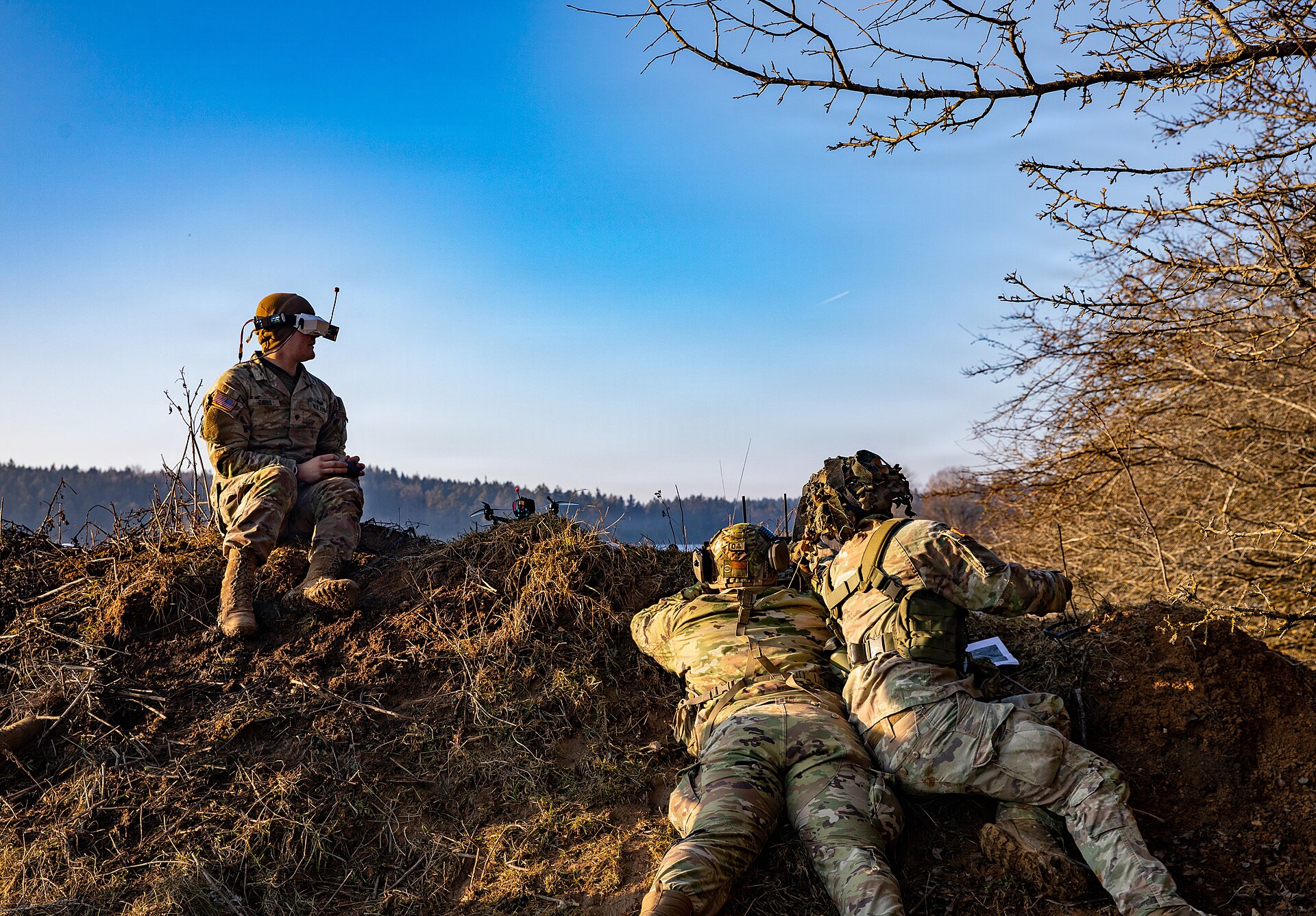
Cover photo: U.S. soldiers with a first-person-view drone during the Drone Validation Course at the Joint Multinational Readiness Center, Hohenfels, Germany, January 2026. U.S. Army photo by Spc. Adrian Greenwood, public domain, via Wikimedia Commons.
Questions readers ask
- What is AutoWarCom?
- AutoWarCom, or Autonomous Warfare Command, is a planned four-star U.S. military command announced by Defense Secretary Pete Hegseth on September 30, 2026. It is meant to have service-like authorities to scale drones, robots and AI across the joint force, with a target start date of October 1, 2027.
- Does Congress need to approve the Autonomous Warfare Command?
- Yes. Reporting by DroneXL and Breaking Defense notes the command needs legislation to get its own budget and manpower. The Senate Armed Services Committee’s fiscal 2027 defense bill would create a similar Robotic and Autonomous Systems Combatant Command, but with narrower, limited acquisition authority, and it has not yet become law.
- What is Project Meridian?
- Project Meridian is a 120-day Pentagon study of future warfare, co-led by Elon Musk, Palmer Luckey and Newt Gingrich and commissioned through MITRE under Pentagon CTO Emil Michael. It covers AI, autonomy, directed energy, robotics and biotechnology, and its findings are due January 28, 2027 as a public report with a classified annex.
- Why are ethics experts worried about Musk and Luckey leading Project Meridian?
- Musk’s SpaceX and Luckey’s Anduril both hold large U.S. defense contracts and could benefit from the study’s recommendations, NPR reported. The Pentagon has not said whether the two are government employees, who are bound by federal conflict-of-interest law, or contractors, who are not.
- What is Project Agincourt?
- Project Agincourt is the one-year interim effort that is supposed to build the path to AutoWarCom. It is run out of the Pentagon’s unmanned systems portfolio office and led by Defense Innovation Unit director Owen West as CEO and Navy SEAL Senior Chief Max Strasiser as COO.
+ Sources
- DefenseScoop — U.S. creates new Autonomous Warfare Command to fuse and enhance military drone ops
- Breaking Defense — Hegseth announces plans for new 4-star drone command, further general officer cuts
- Military Times — Hegseth announces new four-star command for autonomous warfare
- The War Zone — Vision for new Autonomous Warfare Command laid out by Pentagon
- DroneXL — Hegseth orders four-star drone command, Congress has to build it
- NPR — Elon Musk and Palmer Luckey's new Pentagon roles raise ethics worries
- The Next Web — Project Meridian: Musk, Luckey and Gingrich to map future warfare
- CNBC — Anduril lands $2.9 billion Navy submarine shipyard contract days after Luckey joins Pentagon weapons group
The Weekly Diff launches soon.
Follow via RSSKeep reading