Apple NameDrop lawsuit in India: startup seeks ₹1,500 crore and an iPhone sales block
GG Technologies, maker of the StayTouch app, says NameDrop copies its patent and has asked the Bombay High Court to stop Apple selling iPhones with the feature in India.
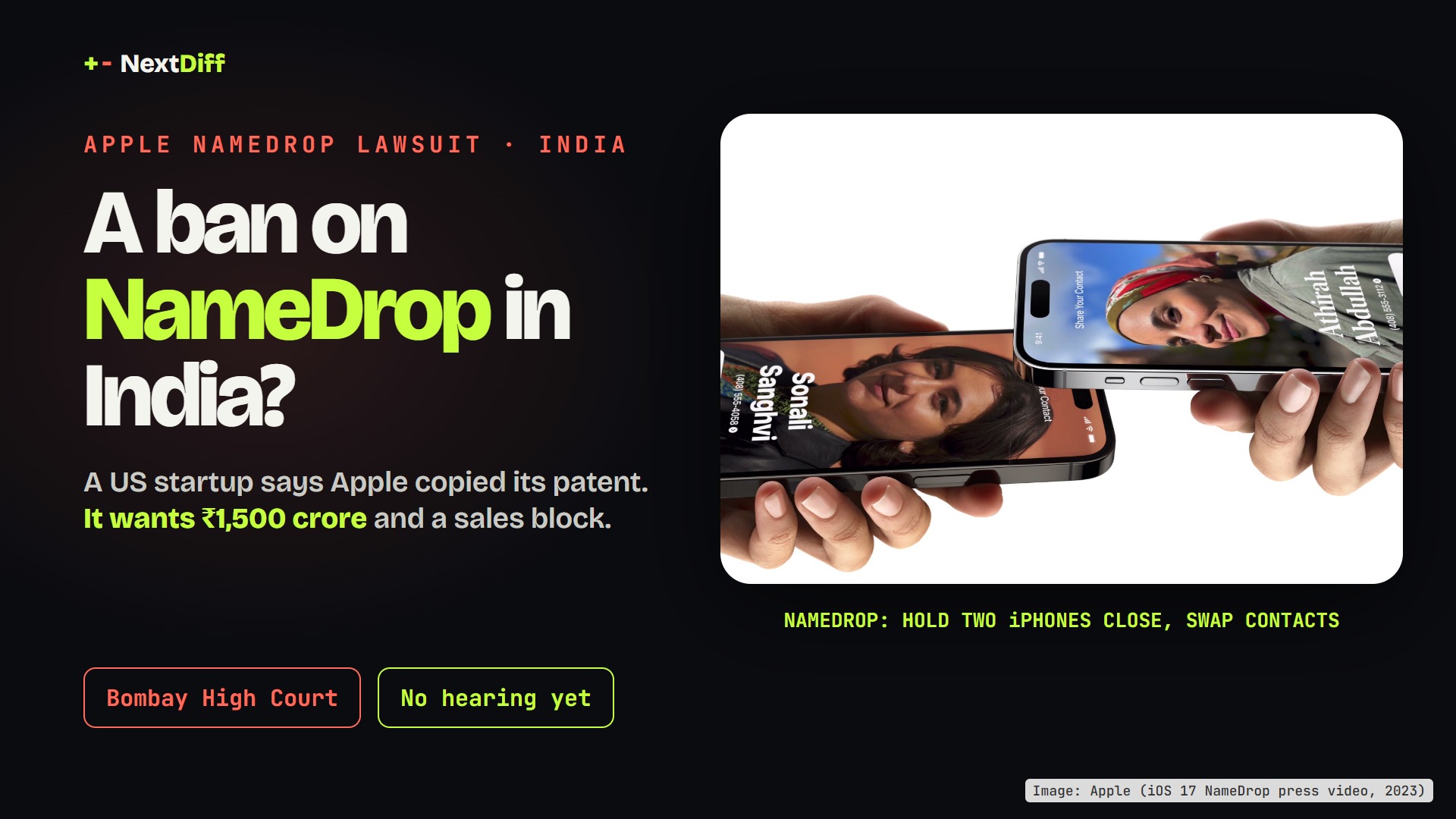
US startup GG Technologies has sued Apple in the Bombay High Court, saying the iPhone's NameDrop contact-sharing feature infringes its Indian patent. TechCrunch reported on 20 November that it seeks ₹1,500 crore in damages and a block on selling iPhones and Apple Watches with NameDrop in India. No hearing date is set; NameDrop still works.
A US startup has taken Apple to court in India over NameDrop, the iPhone feature that swaps contact cards when two phones are held close. In the Apple NameDrop lawsuit in India, GG Technologies says the feature copies its patented technology. It wants ₹1,500 crore (about $162 million) in damages and an order that would stop Apple selling or importing iPhones and Apple Watches with NameDrop in India, according to TechCrunch, which first reported the case on 20 November.
Our 28-second version:
Before: NameDrop was a small convenience Apple added in iOS 17. Now: it is the centre of a patent fight on three fronts, in Texas, at the US International Trade Commission and in the Bombay High Court.
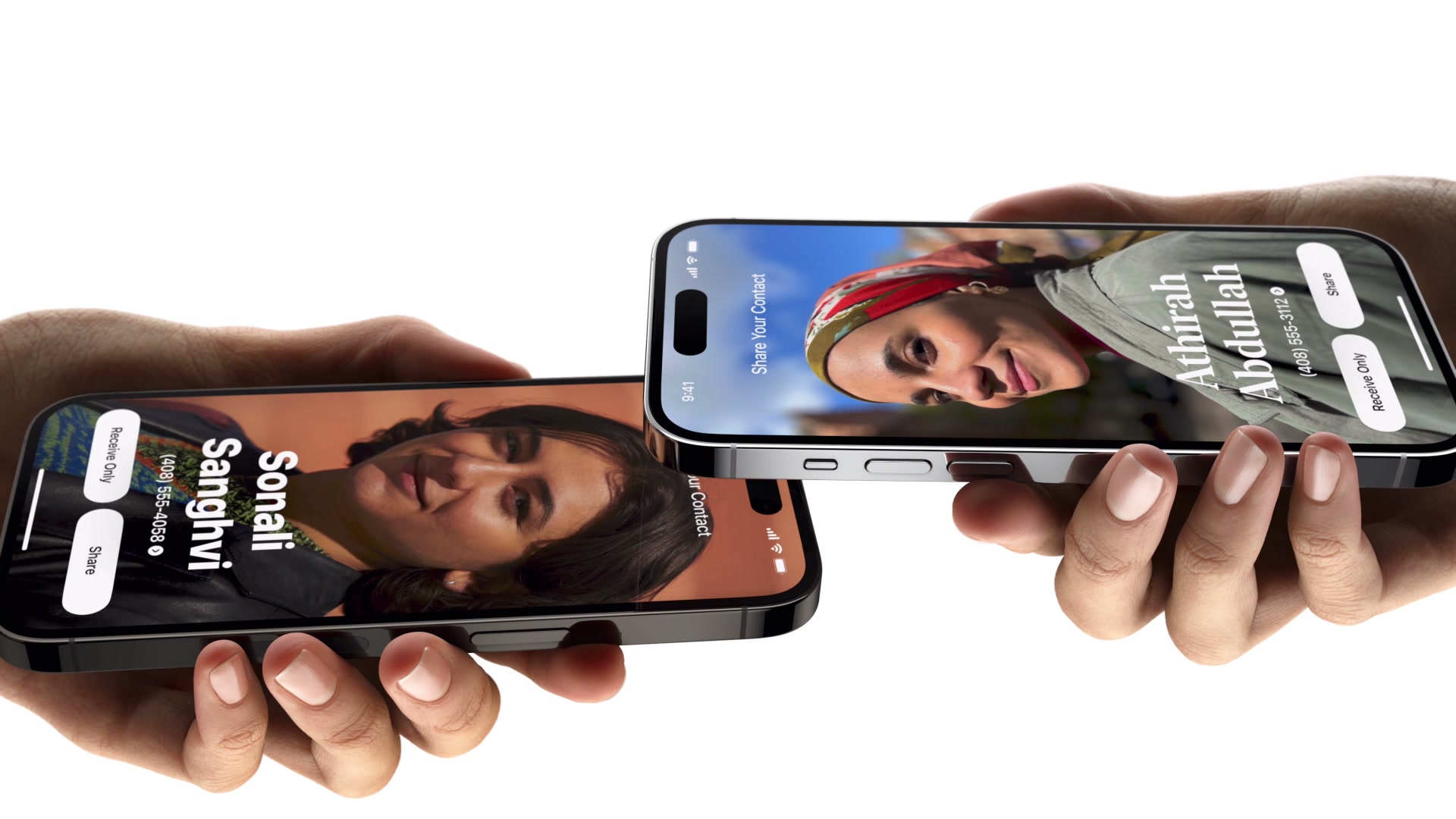 Image: Apple (iOS 17 NameDrop press video, 2023)
What is the Apple NameDrop lawsuit in India about?
GG Technologies is a Santa Monica company that makes StayTouch, an app that lets people exchange contact details by bringing their phones close together. TechCrunch says it was built as an alternative to swapping business cards. The company was founded in 2018 by Gaurav Goel, and StayTouch launched in 2019.
According to TechCrunch, GG filed a 781-page suit in the Bombay High Court in October, after mediation with Apple from April to September failed. The claim rests on an Indian patent that GG applied for in 2021 and was granted in July 2024. The company first sought US patent protection in 2019, years before Apple announced NameDrop in June 2023.
"We are seeking an injunction to restrict the usage of the NameDrop feature which is native to iOS," GG Technologies told TechCrunch. Apple did not respond to TechCrunch's request for comment, and the report does not name the Indian patent's number.
How does NameDrop work?
NameDrop is part of AirDrop. You hold the top of your iPhone near another iPhone (or an Apple Watch), and both screens show the other person's Contact Poster. You can choose to share your card and receive theirs, or only receive. Apple's personal safety guide says it shares your name, the phone number or email you pick, and your Contact Poster, not your address or birthday. Pulling the phones apart or locking the iPhone cancels it.
It needs iOS 17.1 or later on the iPhone, or watchOS 10.1 on the watch. To switch it off, go to Settings > General > AirDrop and turn off Bringing Devices Together.
What does GG want from the court?
| Demand | What it means |
|---|---|
| ₹1,500 crore in damages | about $162 million at TechCrunch's conversion |
| An injunction on NameDrop | restrict use of the feature in India |
| A sales and import block | no iPhones or Apple Watches preloaded with NameDrop sold or imported in India |
The case has not yet been listed for a hearing, and no interim order has been reported.
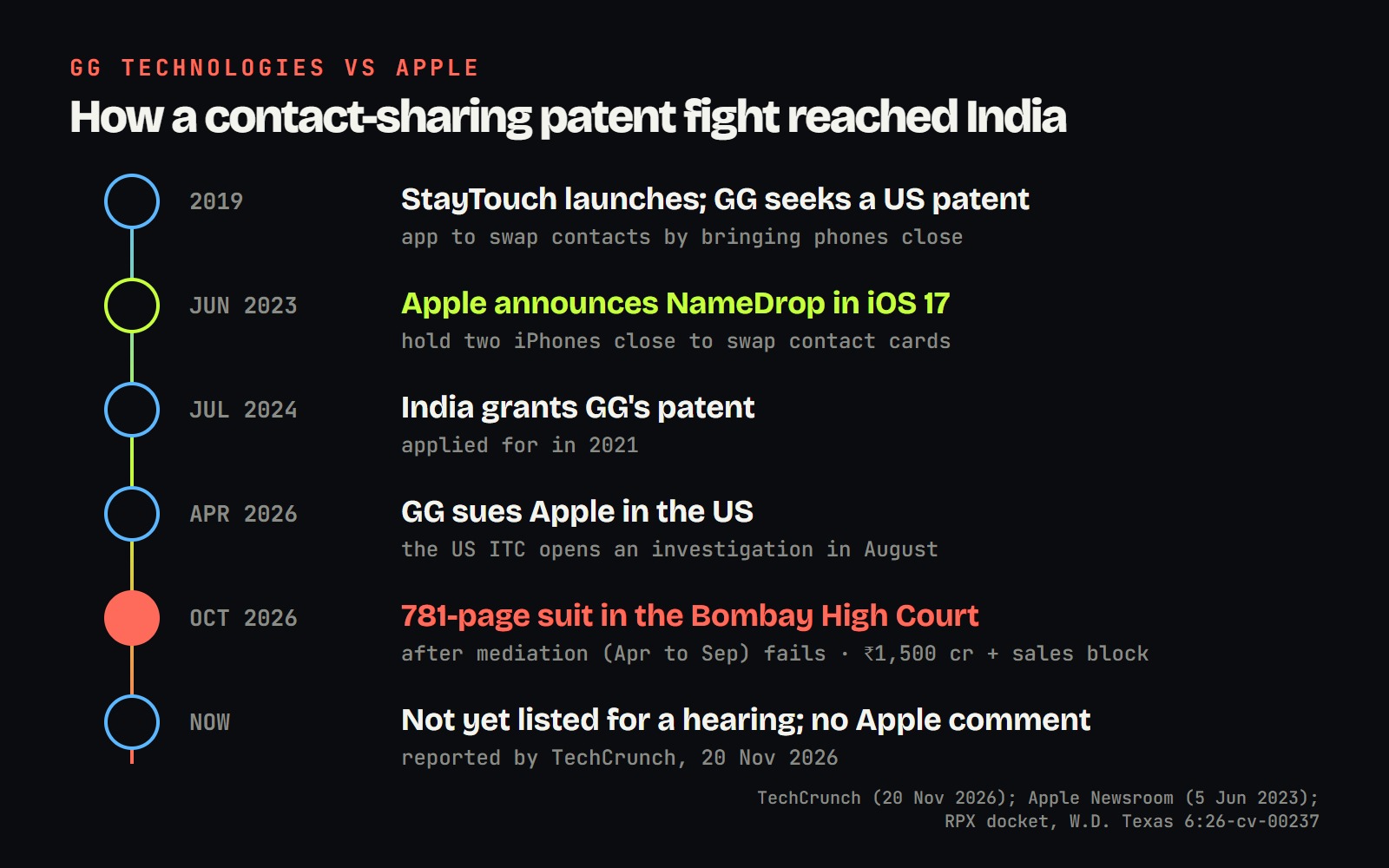 Graphic: NextDiff, from TechCrunch, Apple Newsroom and the US court docket
The US cases came first
This is not GG's first move. TechCrunch reports that the company sued Apple in the US in April over related patent claims (a federal court in Texas, case 6:26-cv-00237 on the RPX docket). After a complaint from GG, the US International Trade Commission opened an investigation in August. The ITC is the body that can stop imports of products found to infringe US patents, which is why patent holders often go there.
India is the next pressure point. TechCrunch calls the country a major manufacturing hub for Apple outside China, and a market where iPhones still account for under 10% of smartphone shipments.
 Image: A.Savin (Free Art License), Wikimedia Commons
Why it matters
For iPhone owners in India, nothing changes today: NameDrop keeps working and no court has ruled. The interesting part is the ask. A block on selling phones that carry one software feature is a large lever for a small company, and a feature like this can usually be switched off by a software update far more easily than a product can be pulled from shelves.
It also follows a pattern we've seen in other cases this month: a consumer feature or store becomes the hook for a big legal claim, and the result can take years. Sony's PlayStation Store case in the UK was filed in 2022 and was only thrown out by a tribunal this week.
What happens next?
The Bombay High Court first has to list the case. Patent suits like this can end in dismissal, damages, a licence deal or an order to stop using the feature, and any of those is likely months away. The US cases will also shape how both sides play India. We'll update this story when the case gets a hearing date or Apple responds.
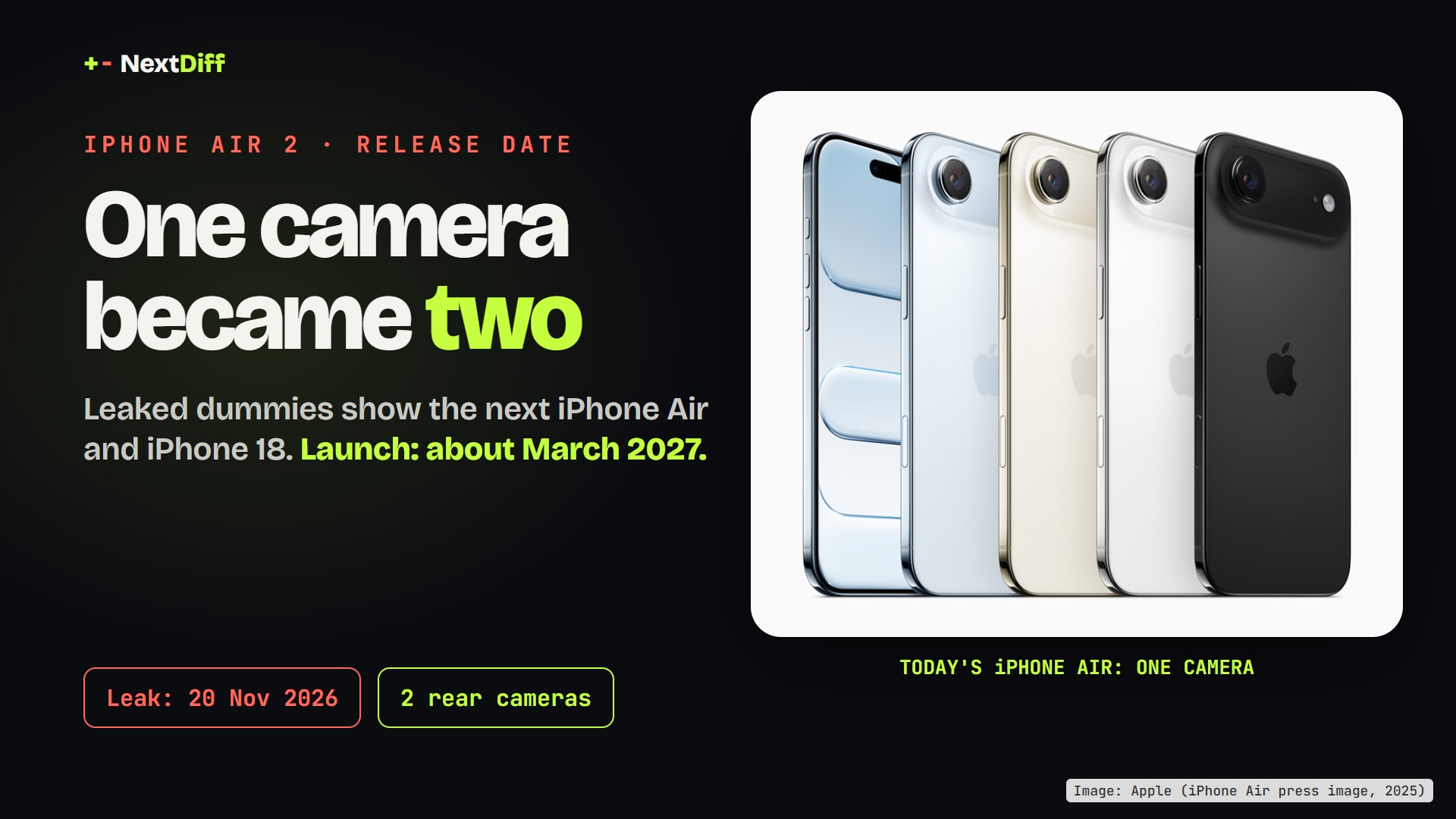
Today's other Apple story: the iPhone Air 2 release date leak.
Questions readers ask
- Is NameDrop banned in India?
- No. GG Technologies has asked the Bombay High Court to restrict NameDrop and block sales of iPhones with it, but the case has not been listed for a hearing and no order has been reported. NameDrop works as before.
- Who sued Apple over NameDrop in India?
- GG Technologies, a Santa Monica startup founded by Gaurav Goel that makes the StayTouch app, which lets people swap contact details by bringing phones close together.
- How much is the Apple NameDrop lawsuit for?
- ₹1,500 crore, about $162 million, according to TechCrunch, plus an injunction on the feature and on sales and imports of iPhones and Apple Watches preloaded with it in India.
- How do I turn off NameDrop on iPhone?
- Open Settings, tap General, then AirDrop, and turn off Bringing Devices Together. You can still share contacts manually.
+ Sources
+ Rate this story
Get stories like this on your phone, the minute they drop.
 Scan with your Android phone
The Weekly Diff launches soon.
Subscribe on YouTubeKeep reading