What is RAM memory? RAM vs storage, and how much RAM you need, explained
RAM is the fast, forgetful memory that holds your open apps. Here's how it works, why it isn't storage, and why AI features now need 8 to 12 GB of it.
RAM (random-access memory) is a device's short-term working memory. It holds open apps and files so the processor can reach them in about 100 nanoseconds, roughly 1,500 times faster than an SSD read, but it loses everything when power is off. Storage keeps files permanently. On-device AI now sets RAM floors: 8 GB on Apple Intelligence iPhones, 12 GB for Google's Gemini Intelligence.
RAM (random-access memory) is your device's short-term working memory. It holds the apps, browser tabs and files you have open right now, so the processor can reach them in about a tenth of a microsecond. It is not storage: RAM forgets everything when the power goes off, while your phone's 128 GB or laptop's 512 GB SSD keeps your files for years.
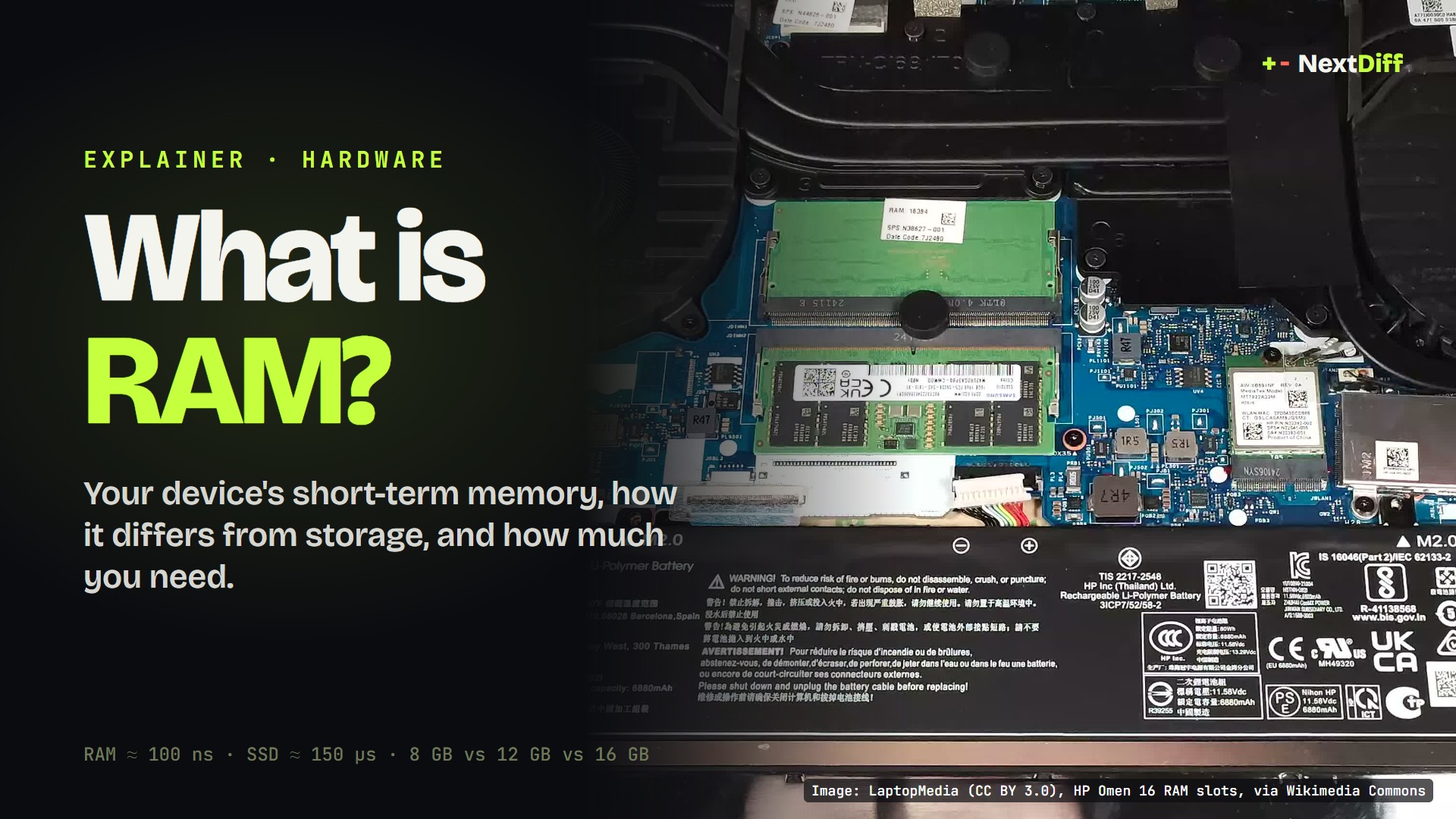
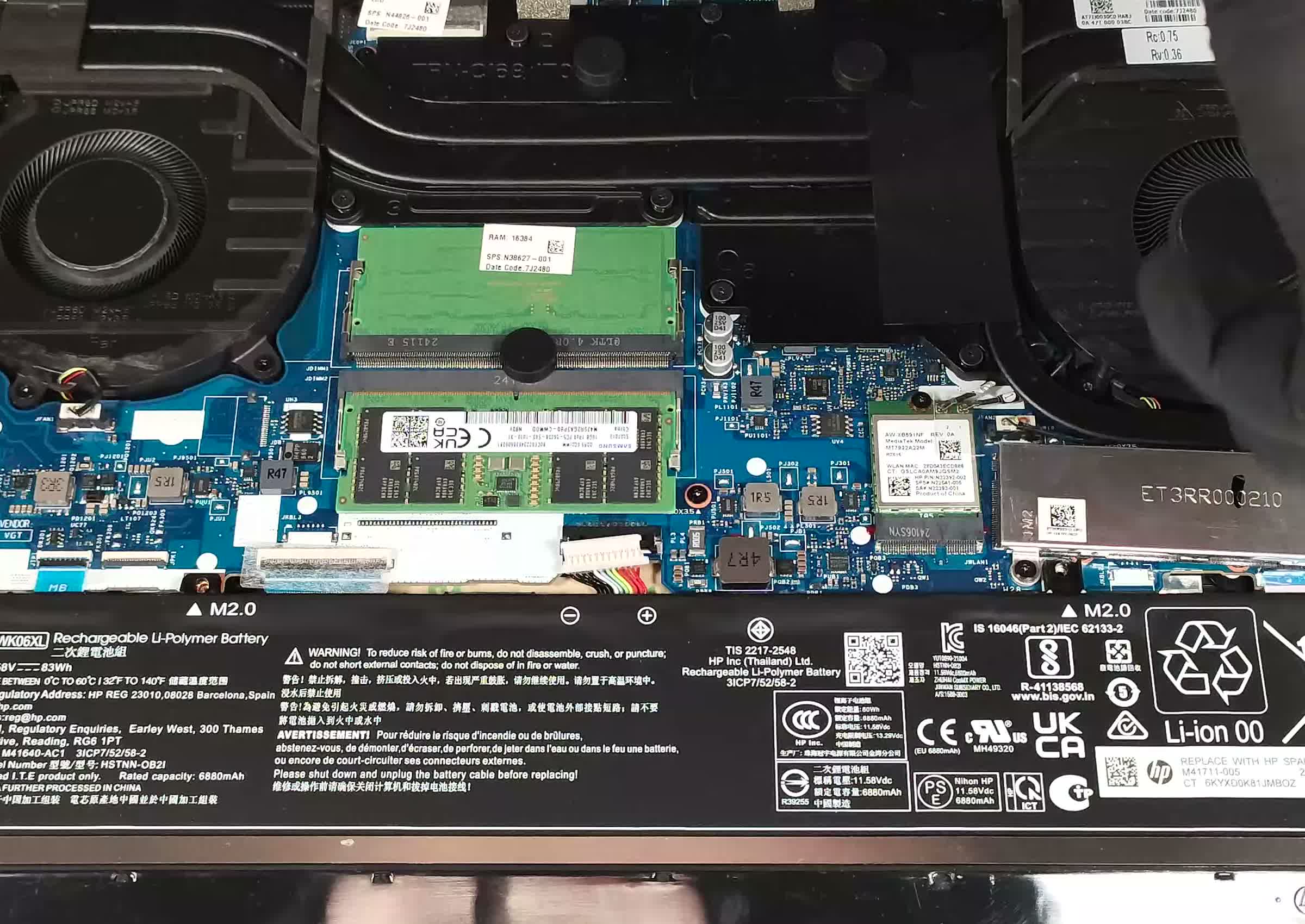 Image: LaptopMedia (CC BY 3.0), still from "How to open HP OMEN 16", via Wikimedia Commons
What is RAM memory, in simple words?
Think of your device as an office. Storage is the filing cabinet across the room: big, permanent, slow to open. RAM is the desk in front of you: smaller, but everything on it is within arm's reach. When you open an app, your phone or laptop copies it from storage onto the desk. When the desk is full, something has to go back into the cabinet, and fetching it again is the pause you feel when an app reloads.
Wikipedia's definition is the formal version: RAM is computer memory that "can be read and changed in any order". "Random access" means the processor can jump straight to any byte at the same speed, instead of reading through it in sequence like an old tape.
How does RAM work?
Almost all main memory in phones, laptops and servers is DRAM (dynamic RAM). Each bit is stored as a tiny electric charge in a capacitor, with a transistor acting as its switch. The charge slowly leaks away, so the memory chip refreshes every cell many times a second, and when power is removed the data is gone. That is why RAM is called volatile.
A second type, SRAM (static RAM), is faster but takes more space per bit, so it is used in small amounts as the processor's cache, right on the chip.
Speed is the whole point. On the widely cited "latency numbers every programmer should know" list, a main-memory read takes about 100 nanoseconds, while a random 4 KB read from an SSD takes about 150,000 nanoseconds: roughly 1,500 times longer. Real devices vary, but the gap is always large.
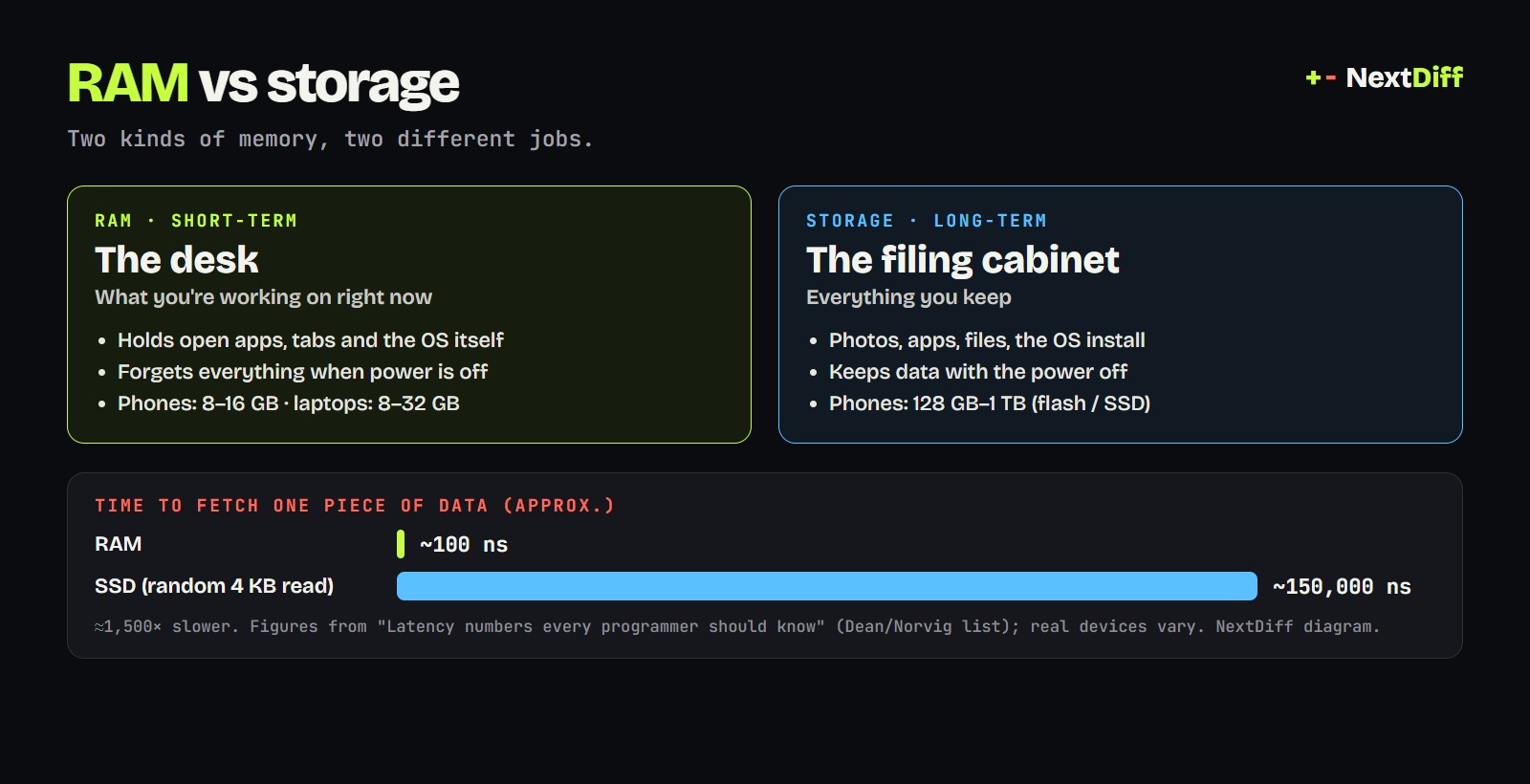 Chart: NextDiff, from the Dean/Norvig latency list.
The operating system decides what stays in RAM. When memory runs short it compresses data or moves it to storage (the page file or swap), which keeps apps alive but slower. We explain that manager role in What is an operating system?
RAM vs storage: what's the difference?
| RAM | Storage (SSD / phone flash) | "Virtual RAM" (RAM Plus, swap) | |
|---|---|---|---|
| Job | Holds what's open now | Keeps apps, photos, files | Borrows storage when RAM is full |
| Keeps data with power off? | No | Yes | Yes, but used as overflow |
| Speed (approx.) | ~100 ns per access | ~150,000 ns per random read | Storage speed |
| Typical size, 2026 | Phones 8–16 GB, laptops 8–32 GB | Phones 128 GB–1 TB | A few GB set aside |
So a "12 GB + 256 GB" phone has 12 GB of RAM and 256 GB of storage. More storage lets you keep more photos; more RAM lets you keep more apps open without reloading.
Examples: how much RAM do today's devices need?
- Windows 11: Microsoft's minimum is 4 GB. On 3 November 2026 Microsoft said Windows 11 on 8 GB PCs is now up to 40% faster at multitasking thanks to better memory compression, while Copilot+ AI PCs require at least 16 GB.
- Mac: On 30 October 2024 Apple doubled the starting memory of MacBook Air models with M2 and M3 to 16 GB.
- iPhone: Apple Intelligence runs on the iPhone 15 Pro and later. Apple doesn't publish a RAM minimum, but MacRumors notes every compatible model has at least 8 GB.
- Android: Google lists 12 GB or more of RAM as a requirement for Gemini Intelligence, its on-device assistant layer. The Pixel 10 has 12 GB and the Pixel 10 Pro has 16 GB.
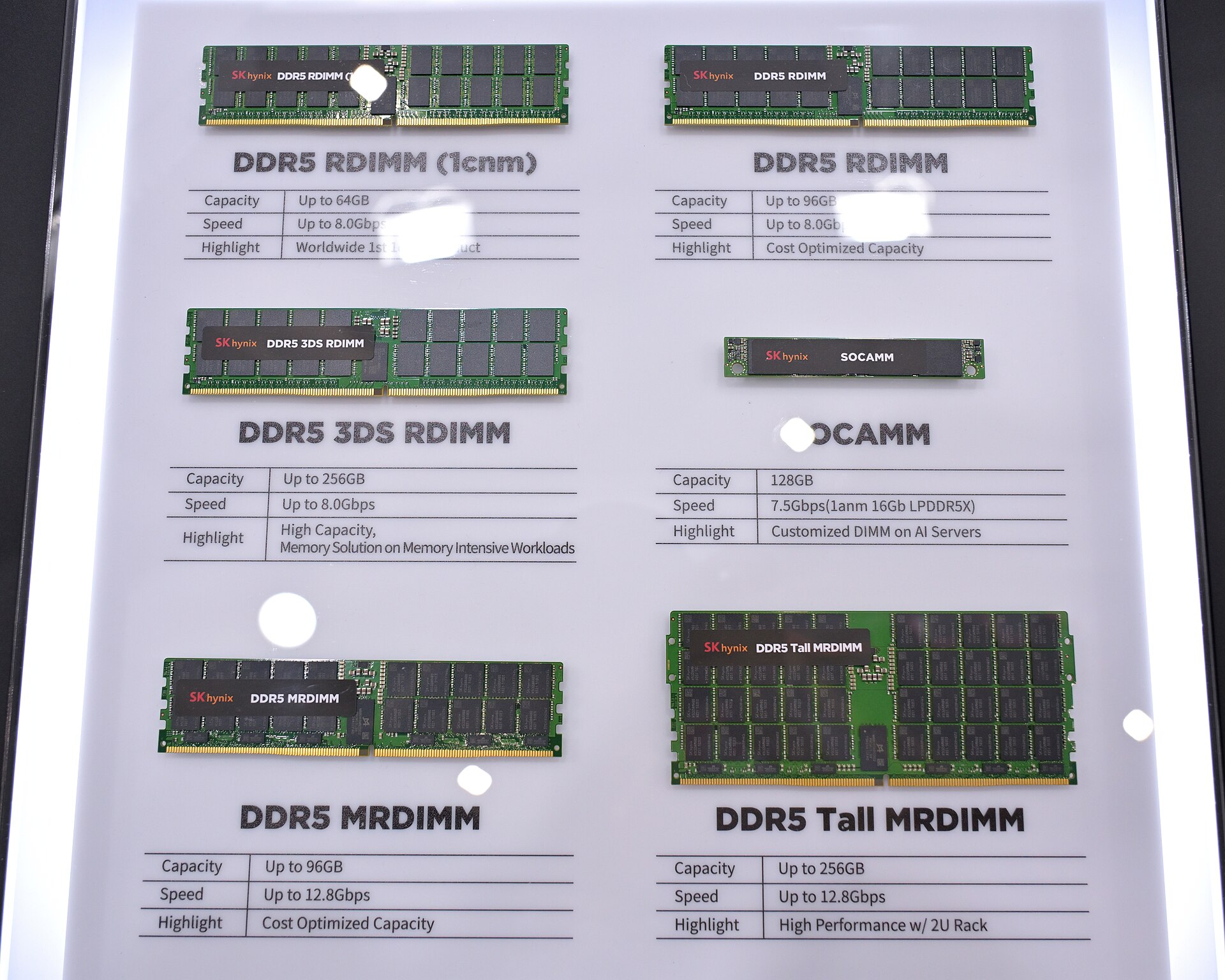 Image: 4300streetcar (CC BY 4.0), SK hynix DDR5 modules at Computex 2025, via Wikimedia Commons
The memory itself keeps getting faster. JEDEC, the body that writes memory standards, extended desktop DDR5 to 8,800 MT/s in April 2024 and published the phone standard LPDDR6 on 9 July 2025; Notebookcheck reports data rates of 10,667 to 14,400 MT/s. Samsung's fastest LPDDR5X already reached 10.7 Gbps per pin in 2024. The leaked Galaxy S27 Pro is expected to use LPDDR6.
How much RAM do I need?
A rough guide, based on what the platform makers themselves require:
- Phone, everyday use: 8 GB handles everyday apps and is what every Apple Intelligence iPhone has.
- Phone, on-device AI: 12 GB if you want Google's Gemini Intelligence features, which need 12 GB or more.
- Laptop, browsing and office: 8 GB is workable on Windows 11 after Microsoft's November update; 16 GB is the comfortable default and what Apple now ships in every MacBook Air.
- Laptop, creative work, gaming, local AI models: 16 GB minimum, 32 GB if you edit video or run AI models on your own machine. Microsoft itself says demanding workloads benefit from 16 GB or more.
Why it matters now
AI is the reason RAM is suddenly a buying decision again. On-device assistants keep a language model in memory, which is why Apple and Google draw their AI lines at 8 GB and 12 GB. At the same time, AI data centres are buying up the world's DRAM. TrendForce measured contract DRAM prices up roughly 93–98% in the first quarter of 2026 and, on 30 September 2026, projected another 10–15% rise in the fourth quarter as suppliers prioritise server memory. That squeeze is why Sam Altman called the RAM in your PC "quite terrible" and why phone and laptop makers are under pressure to raise prices or cut memory.
Common misconceptions
- "My 256 GB phone has 256 GB of RAM." No: that's storage. RAM is the smaller number, usually 8 or 12 GB.
- "Virtual RAM doubles my RAM." Samsung says RAM Plus works by using your storage as virtual memory. It can keep more apps parked, but storage is far slower than real RAM.
- "More RAM always makes a device faster." Only if you were running out. Doubling RAM won't speed up one app that already fits.
- "Used RAM is bad, so clear it." Operating systems deliberately keep recently used apps in memory so they reopen instantly. Killing them just makes them load from storage again.
- "RAM is new tech." The first commercially available DRAM chip, the Intel 1103, went on sale in October 1970.
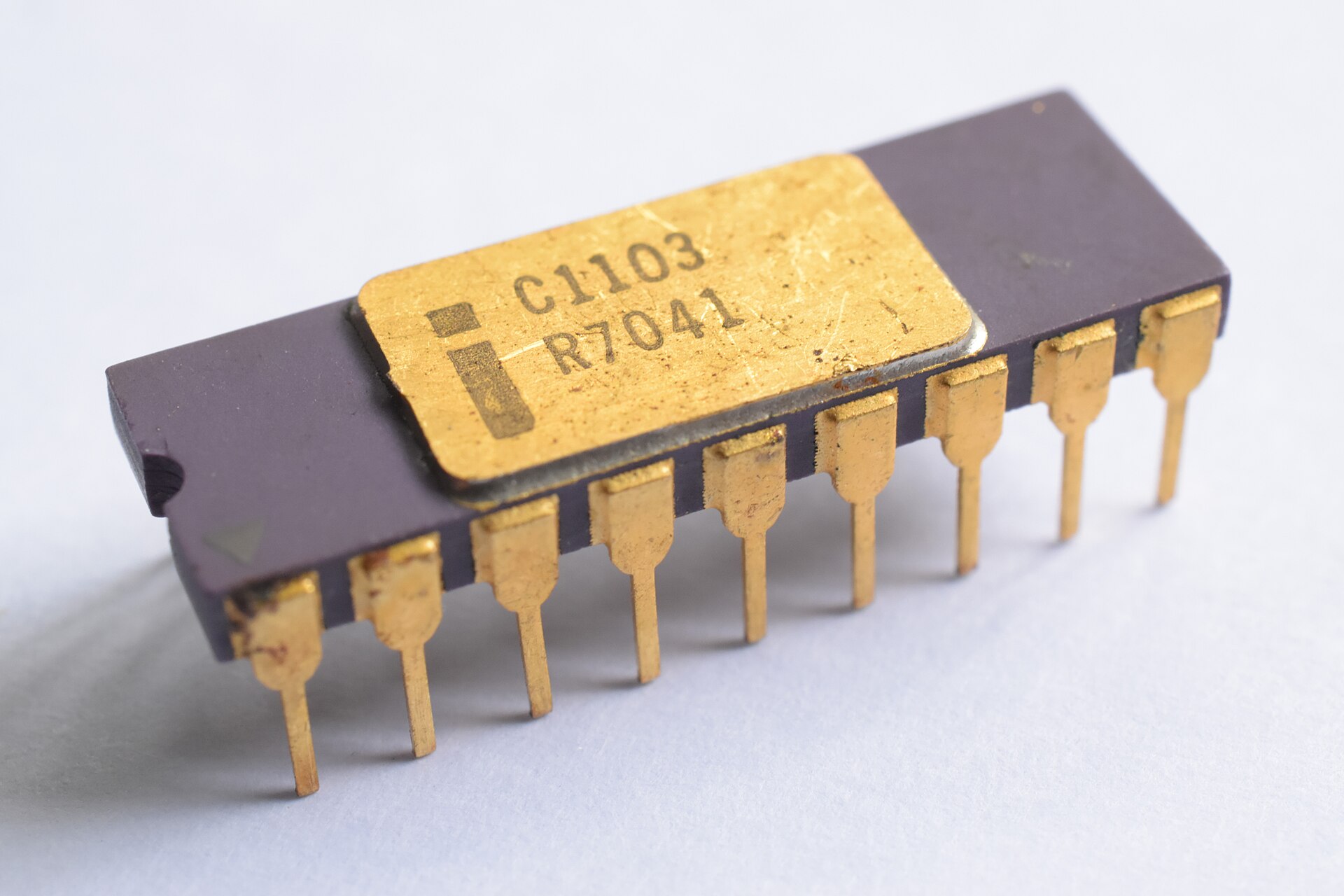 Image: Thomas Nguyen (CC BY-SA 4.0), Intel C1103, via Wikimedia Commons
Latest news
- Windows 11 8GB RAM: Microsoft says the same PC is now up to 40% faster at multitasking (4 Nov 2026)
- Sam Altman RAM comment: why he called the memory in your PC "quite terrible" (2 Nov 2026)
- Galaxy S27 Pro: Samsung's new 4th model, with LPDDR6 memory in the leaks (15 Nov 2026)
- Android Auto Gemini update: Pixel-only suggestions are coming (12 Nov 2026)
- Background: What is an operating system? explains the memory manager that decides what stays in RAM.
Questions readers ask
- What is RAM in simple words?
- RAM is your phone's or computer's short-term memory. It holds the apps and files you have open right now so the processor can use them instantly, and it is wiped when the device turns off.
- What is the difference between RAM and storage?
- RAM holds what is open now and loses it without power; storage (SSD or phone flash) keeps your apps, photos and files permanently. A '12 GB + 256 GB' phone has 12 GB of RAM and 256 GB of storage.
- How much RAM do I need in a phone?
- 8 GB handles everyday apps and is what every Apple Intelligence iPhone has. If you want Google's Gemini Intelligence features on Android, Google lists 12 GB or more of RAM as a requirement.
- Is 8GB RAM enough for a laptop in 2026?
- For browsing and office work, yes: Microsoft says Windows 11 on 8 GB PCs is now up to 40% faster at multitasking after its November 2026 update. For creative work, gaming or local AI models, 16 GB or more is the safer choice, and Apple now ships 16 GB as standard in the MacBook Air.
- Is virtual RAM the same as real RAM?
- No. Features like Samsung's RAM Plus use part of your storage as virtual memory, which keeps more apps parked but is far slower than real RAM.
+ Sources
- Wikipedia — Random-access memory
- Wikipedia — Dynamic random-access memory (Intel 1103, October 1970)
- Microsoft — Windows 11 specifications and system requirements
- Apple Newsroom — New MacBook Pro with M4 family; MacBook Air now starts at 16GB (30 Oct 2024)
- Apple Support — How to get Apple Intelligence (supported iPhones)
- MacRumors — Why Apple Intelligence needs iPhone 15 Pro (8GB RAM)
- Google — Gemini Intelligence requirements (12GB+ RAM)
- Google Store — Pixel 10 and Pixel 10 Pro tech specs
- JEDEC — JEDEC releases new LPDDR6 standard (9 July 2025)
- Notebookcheck — LPDDR6 data rates reach 14,400 MT/s
- Samsung Newsroom — Industry's fastest 10.7Gbps LPDDR5X DRAM (17 Apr 2024)
- TrendForce — DRAM contract prices projected up 10–15% QoQ in 4Q26 (30 Sep 2026)
- Samsung — What is RAM Plus and how to use it
- Latency numbers every programmer should know (Dean/Norvig list)
+ Rate this story
Get stories like this on your phone, the minute they drop.
 Scan with your Android phone

The Weekly Diff launches soon.
Subscribe on YouTubeKeep reading