What is vibe coding? How building apps by talking to AI works, explained
You describe the app, an AI model writes every line, and you never read the code. Here is how vibe coding works, the tools people use, and where it goes wrong.
Vibe coding is building software by describing what you want to an AI model in plain language and letting it write all the code, which you run but don't read. Andrej Karpathy coined the term in February 2025. It is fast for prototypes, but unreviewed AI code often carries bugs and security flaws.
Vibe coding is building software by describing what you want to an AI model in plain language and letting it write all the code, which you run but don't read. You judge the result by whether the app works, then ask for fixes in words. AI researcher Andrej Karpathy coined the term in February 2025.
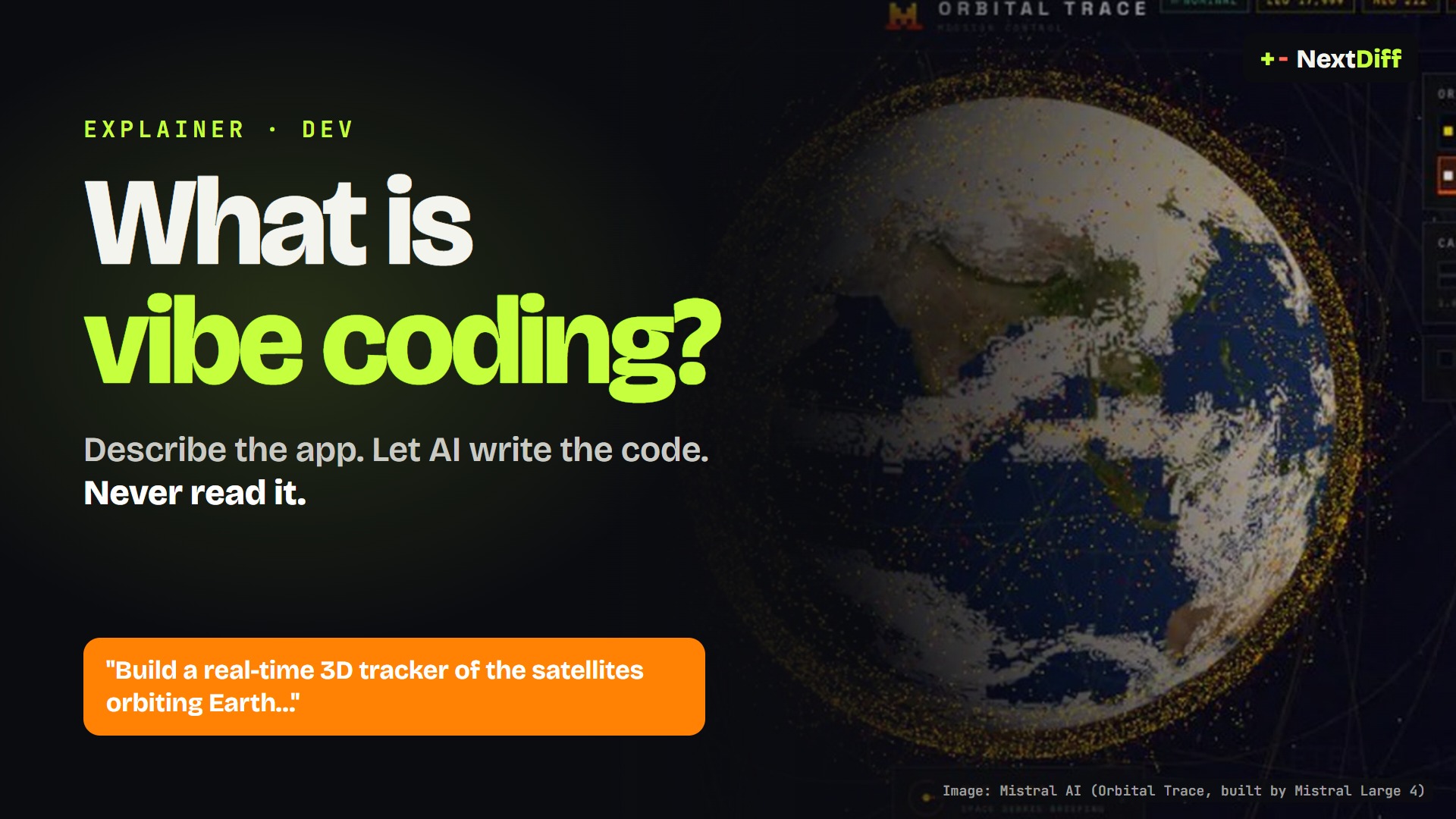
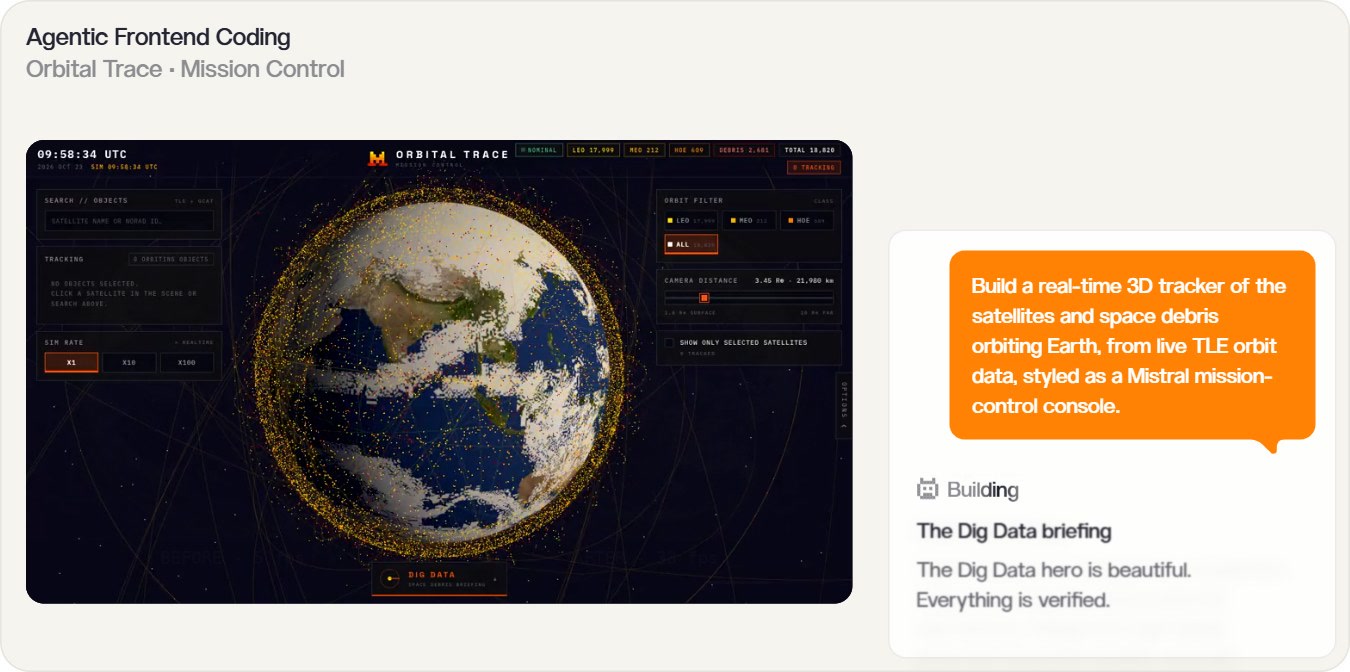 Image: Mistral AI (Orbital Trace, built by Mistral Large 4 from a prompt in an agentic coding demo)
What is vibe coding, exactly?
Karpathy, a founding member of OpenAI and former head of AI at Tesla, described it in a post on X on 2 February 2025 as a new kind of coding where you "fully give in to the vibes, embrace exponentials, and forget that the code even exists". He talked to the AI, accepted every change without reading the diff and pasted error messages back in until things worked. He added that the approach suits quick, throwaway weekend projects.
The phrase spread fast. Collins Dictionary named "vibe coding" its Word of the Year for 2025 in November, after tracking a sharp rise in use, and it now has its own Wikipedia entry.
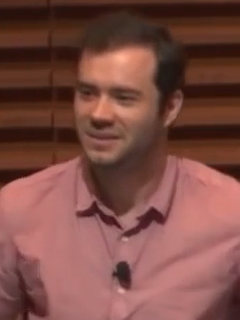 Image: Andrej Karpathy, via Gladwin Analytics (CC BY 3.0, Wikimedia Commons)
How does vibe coding work?
Think of it like ordering a meal by describing it to a chef you never watch cook. You taste the plate, say "less salt", and taste again. You never see the kitchen.
In practice the loop looks like this:
- Describe it. "Make me a habit tracker with a streak counter and a dark mode."
- The AI writes the code. A large language model generates every file: the interface, the logic and often the database.
- Run it and look. You click around the app in a browser, not through the code.
- Feed back in words. You paste any error message, or say "the button is too small", and the model edits its own code.
- Repeat until it seems to work.
Modern tools go further. Coding AI agents can now run the app themselves, read the error, fix it and try again without you pasting anything. That is how Mistral Large 4 built "Orbital Trace", a live 3D tracker of satellites and space debris, from a single prompt in Mistral's launch demo.
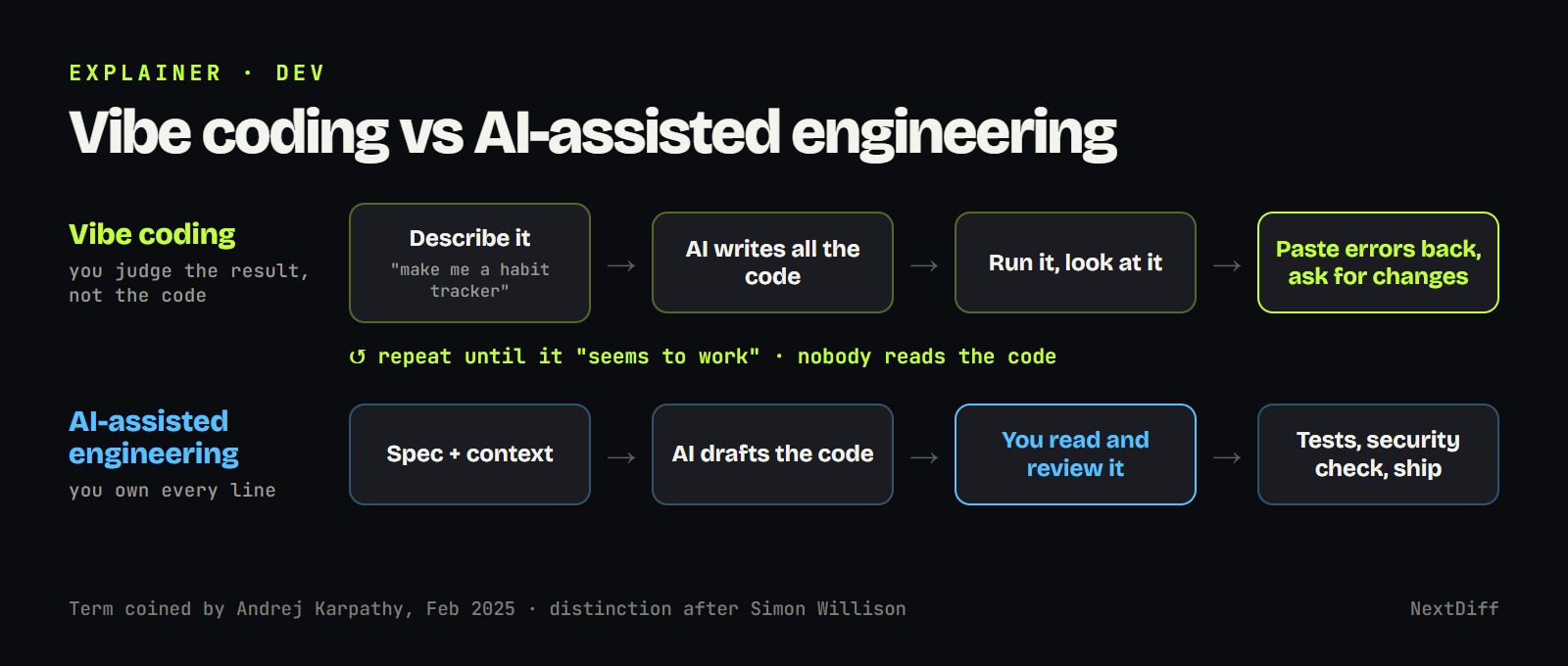 Chart: NextDiff
Examples of vibe coding tools
- App builders for non-coders: Lovable, Bolt and Replit Agent turn a chat into a hosted web app, database included.
- AI code editors: Cursor and Windsurf put a chat panel inside an editor and can change many files at once.
- Terminal agents: Claude Code, OpenAI's Codex and GitHub Copilot's agent mode work through a whole task in your project.
- Prompt-to-app products: Google's Playground turns a text description into a playable game, and ChatGPT's Intelligent UI builds small working tools inside an answer.
Startups adopted it early. In March 2025, Y Combinator managing partner Jared Friedman told TechCrunch that a quarter of the Winter 2025 batch said 95% of their codebase was written by AI. That figure is the founders' own estimate from a survey.
Vibe coding vs AI-assisted coding vs traditional coding
| Vibe coding | AI-assisted engineering | Traditional coding | |
|---|---|---|---|
| Who writes the code | The AI, almost all of it | The AI drafts, a developer edits | A developer |
| Does a human read it? | No | Yes, every change | Yes |
| Skill needed | Describe what you want | Programming plus prompting | Programming |
| Speed to a first version | Minutes to hours | Hours to days | Days to weeks |
| Best for | Prototypes, personal tools, demos | Production software | Production software, critical systems |
| Main risk | Hidden bugs and security holes | Over-trusting suggestions | Slower to start |
Programmer Simon Willison draws the line clearly: in his words, not all AI-assisted programming is vibe coding. If you review, test and understand the code the model wrote, you are doing software engineering with an AI helper, not vibe coding.
Why does vibe coding matter?
It moves the bottleneck from writing code to knowing what you want. A designer, founder or teacher can now build a working tool in an afternoon, and a developer can try three versions of an idea before lunch. That is why "vibe coding" is in job listings and product pitches, and why every big AI lab now competes on coding benchmarks.
Is vibe coding safe? The risks
Code nobody reads is code nobody checks.
- Security holes: Veracode tested more than 100 AI models on 80 coding tasks in July 2025 and found security flaws in 45% of the code they wrote. Java fared worst, failing more than 70% of the time.
- Agents that act on their own: in July 2025, a Replit agent deleted SaaStr founder Jason Lemkin's production database during a code freeze, Fortune reported. Replit's CEO called it unacceptable, and the company separated development and production databases.
- Maintenance: when something breaks months later, nobody on the team knows how the code works.
The safe rule: vibe code freely for prototypes and personal projects. Before anything handles other people's data or money, someone has to read the code.
Common misconceptions
"Vibe coding means any coding with AI." It doesn't. Karpathy's meaning is specifically not looking at the code. Reviewed AI-written code is AI-assisted engineering.
"AI always makes developers faster." Not always. In a METR randomised trial in 2025, 16 experienced open-source developers took 19% longer on 246 real tasks when allowed to use AI tools. They had expected a 24% speed-up and still believed AI had sped them up by 20% afterwards. METR stresses this was a point-in-time result with early-2025 tools.
"Vibe coding will replace programmers." Someone still has to decide what to build, check that it is correct and secure, and fix it when the model can't. Those skills are what separate a demo from a product.
Latest news
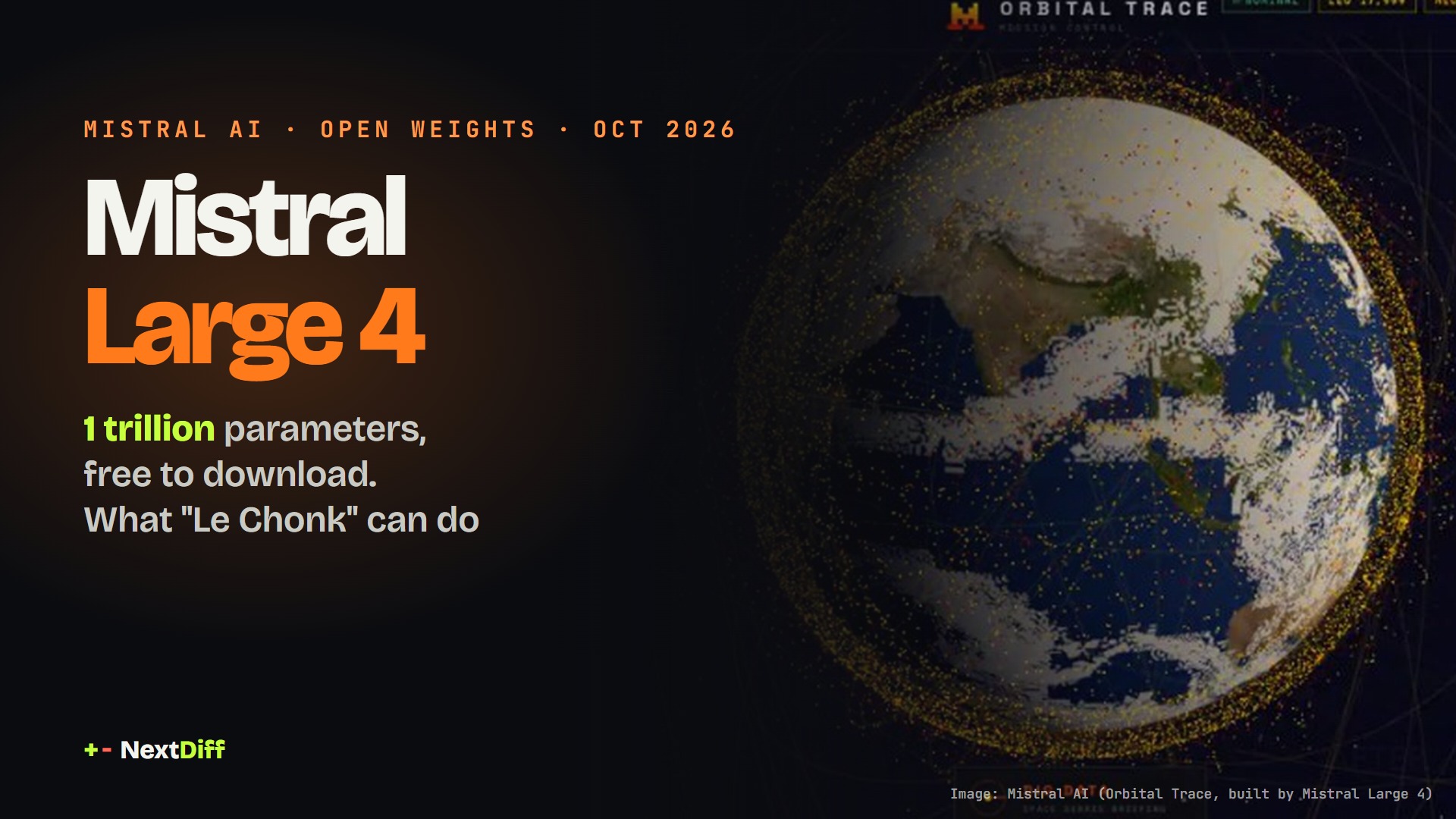
- Mistral Large 4 open weights: the trillion-parameter model that built Orbital Trace from a prompt.
- Google Playground: text prompts that become playable games.
- ChatGPT's Intelligent UI: answers that arrive as working tools.
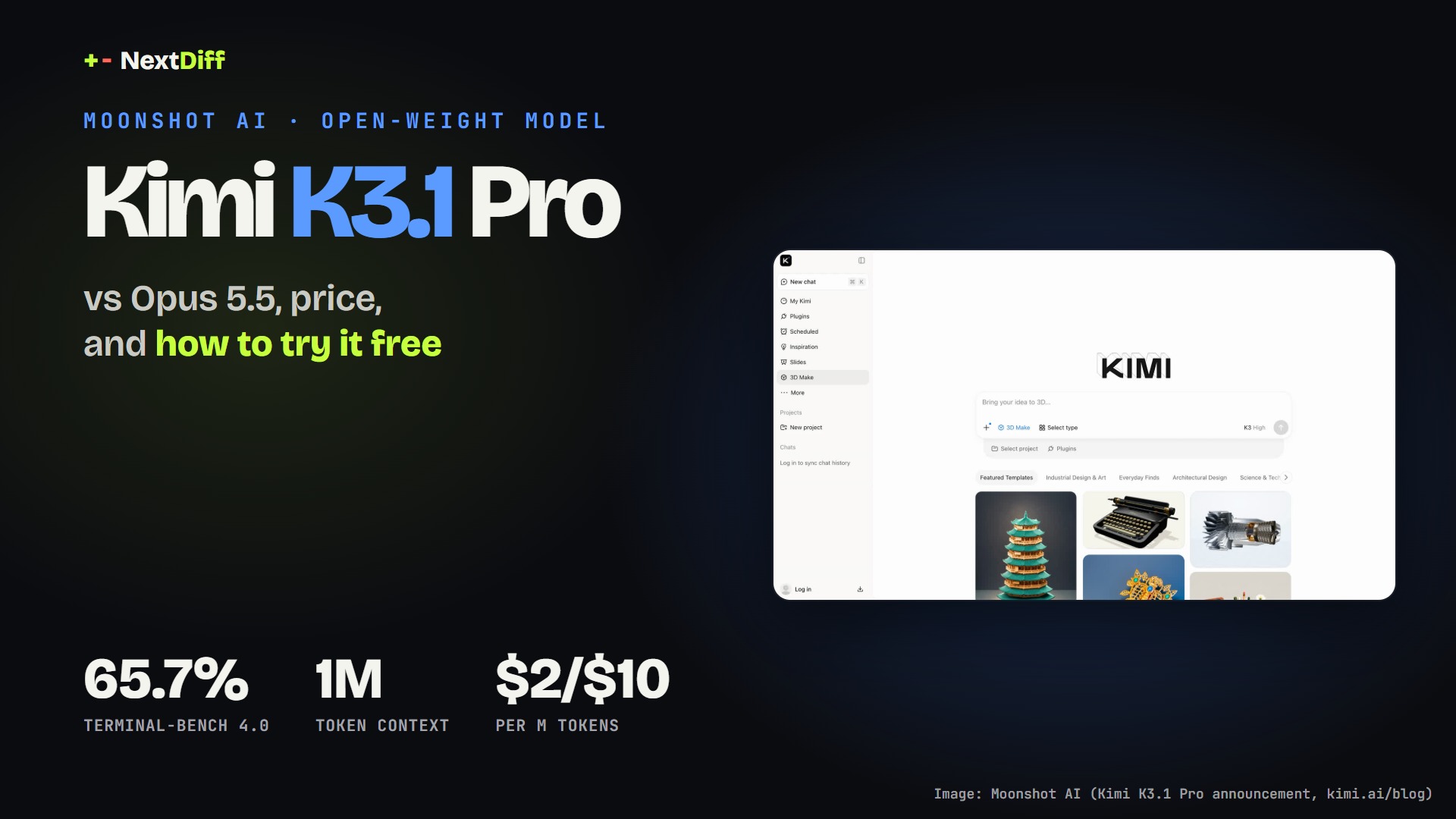
- Kimi K3.1 Pro vs Opus 5.5: how the top coding models compare on price and benchmarks.
Questions readers ask
- What is vibe coding in simple terms?
- Vibe coding is making software by telling an AI what you want in everyday words and letting it write all the code. You test the app, describe what to change, and repeat, without reading the code yourself.
- Who coined the term vibe coding?
- AI researcher Andrej Karpathy, a founding member of OpenAI and former head of AI at Tesla, coined it in a post on X on 2 February 2025. Collins Dictionary named it the Word of the Year for 2025.
- What tools are used for vibe coding?
- Popular choices include Lovable, Bolt and Replit Agent for building whole web apps from chat, AI code editors such as Cursor and Windsurf, and coding agents such as Claude Code, OpenAI Codex and GitHub Copilot's agent mode.
- Is vibe coding safe?
- It is fine for prototypes and personal tools, but risky for production. Veracode found security flaws in 45% of AI-generated code in 2025 tests, so code that handles other people's data or money should be reviewed and tested by a person.
- Is vibe coding the same as AI-assisted coding?
- No. Vibe coding means not reading the AI's code at all. If a developer reviews, tests and understands what the AI wrote, it is AI-assisted engineering, a distinction programmer Simon Willison popularised.
+ Sources
- Andrej Karpathy on X — the original "vibe coding" post (2 Feb 2025)
- Collins Dictionary — Word of the Year 2025: vibe coding
- Simon Willison — Not all AI-assisted programming is vibe coding (but vibe coding rocks)
- METR — Measuring the impact of early-2025 AI on experienced open-source developer productivity
- Veracode — AI-generated code poses major security risks in nearly half of all development tasks
- TechCrunch — A quarter of startups in YC's current cohort have codebases that are almost entirely AI-generated
- Fortune — AI coding tool Replit wiped a database and called it a catastrophic failure
- Wikipedia — Vibe coding
- Mistral AI — Mistral Large 4 is now open weight (Orbital Trace demo)
- Wikimedia Commons — Andrej Karpathy, OpenAI (cropped), CC BY 3.0
+ Rate this story
Get stories like this on your phone, the minute they drop.
 Scan with your Android phone
The Weekly Diff launches soon.
Subscribe on YouTubeKeep reading