Etched draws $40B–$50B bids weeks after a $21B round as inference chips heat up
The four-year-old chip startup, which says its inference systems beat Nvidia on cost per token, has quadrupled its valuation since July — before shipping at scale.
AI inference-chip startup Etched is fielding investment offers valuing it at $40 billion to $50 billion, TechCrunch reported on October 5, 2026. That is roughly double the $21 billion valuation set when Jane Street led a $700 million round in August, and four times its July valuation, as investors bet on cheaper alternatives to Nvidia for running AI models.
In December 2025, Etched was a $5 billion bet on a single idea: a chip that only runs transformer models. Ten months later, investors are offering to value it at up to ten times that. The inference-chip startup is fielding offers at valuations between $40 billion and $50 billion, TechCrunch reported on October 5 — roughly double the $21 billion it was valued at in August, and about four times where it stood in July.
The bids are preliminary, terms could change, and Etched declined to comment. But the pace says a lot about where AI hardware money is flowing: away from chips that train models, and toward chips that run them cheaply.
What changed, and how fast?
Etched’s valuation has doubled twice in roughly three months:
- December 2025: about $5 billion.
- July 23, 2026: a $300 million Series C led by Sequoia at $10.3 billion.
- August 18, 2026: a $700 million Series D led by quant trading firm Jane Street at $21 billion, per TechCrunch. Kleiner Perkins, Sequoia, Andreessen Horowitz, Peter Thiel, Tiger Global, Bain Capital Ventures and Blackstone were among the other backers. The round took total funding to about $1.9 billion, according to Pulse 2.0.
- October 2026: offers of $40 billion from top-tier investors and up to $50 billion from lesser-known backers, one person familiar with the company told TechCrunch.
TechCrunch notes that if Etched raised another round the size of its last one, it could fund roughly three and a half years of operations — so this is less about survival than about locking in capital before it scales manufacturing.
What does Etched actually build?
Etched originally pitched Sohu, a chip hard-wired for transformers, the architecture behind most large language models. It has since broadened that pitch. The company now sells what it calls frontier inference clusters — full systems including racks, interconnect, power, cooling and software — built around two custom components, Fudzilla reported.
To see why it has two parts, it helps to know how inference works. “Inference is built in two stages — prefill and decode,” co-founder and COO Robert Wachen told TechCrunch.
- Prefill is when the model reads your whole prompt at once. It is limited by raw compute. Etched’s answer is a chip that runs its math blocks at low voltage — less than half that of most AI chips, the company says — so it can pack in more transistors without overheating.
- Decode is when the model generates its answer one token at a time. It is limited by how fast chips can fetch data from memory. Etched built a new memory system and interconnect it calls cluster-scale memory, which lets many chips use “a shared memory pool at a very, very fast, low latency,” Wachen said.
The chip is made on TSMC’s N4P process, and Etched says the systems support mixture-of-experts models such as DeepSeek and Qwen as well as non-transformer architectures like Mamba, according to The Next Web. The company claims its hardware produces more tokens, faster and at lower cost, than Nvidia’s — a claim that, for now, rests on Etched’s own numbers and early customer testing.
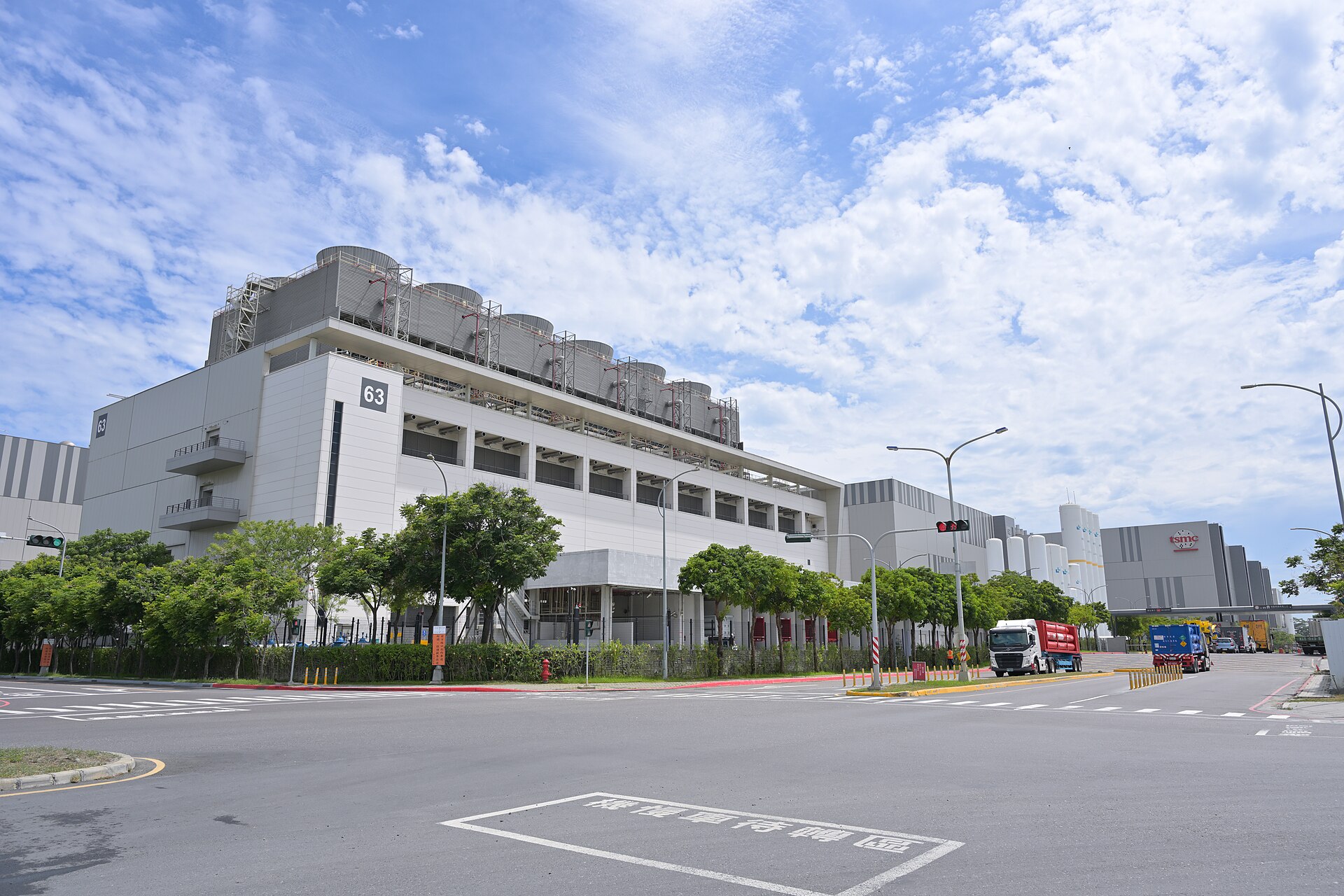 TSMC’s Fab 18 in the Southern Taiwan Science Park. Etched’s chips are made by TSMC, and the startup has opened a facility in Taiwan to coordinate production. Photo by 4300streetcar, CC BY 4.0, via Wikimedia Commons.
Who is buying Etched’s chips?
Jane Street is both lead investor and first customer. It received Etched’s first rack in July and is deploying it into production workloads. “We tested the chip and are pleased with the early results,” the firm said, per TechCrunch. Etched says it has more than $1 billion in contracts across frontier AI companies and cloud providers, though it has not named them — and those are orders, not recognised revenue.
The company has grown to about 400 people, roughly 15% of whom previously worked at Nvidia. It runs a new 10-megawatt data center in Silicon Valley and has set up a facility in Taiwan to coordinate production near TSMC, where it manufactured test chips this summer, according to TechCrunch.
Why are investors paying this much for inference?
Because inference is where the bills are. A frontier model is trained a handful of times, but it answers billions of prompts. Every cent shaved off the cost per token compounds across that volume, and the biggest buyers are actively looking for alternatives to Nvidia’s GPUs.
Etched is not alone in chasing that market:
- Nvidia signed a non-exclusive, $20 billion deal to license Groq’s inference technology on December 24, 2025, bringing over founder Jonathan Ross and president Sunny Madra, W.Media reported. Groq continues to operate independently.
- OpenAI unveiled Jalapeño, its first in-house inference accelerator co-developed with Broadcom, saying it went from design to tape-out in nine months and delivers performance per watt “substantially better than current state-of-the-art,” according to Engadget. Initial deployment starts in late 2026.
When the biggest model maker designs its own inference chip and the biggest chipmaker pays $20 billion for inference tech, a startup with working racks and $1 billion in orders starts to look scarce.
What could go wrong?
Plenty. Etched is still moving from test silicon and early systems towards large-scale deployment, as Fudzilla put it. Scaling production is the hard part for any chip company, and it depends on a supplier that is already stretched: TSMC has told Nvidia and Broadcom it cannot meet all of their demand for advanced AI chips, Computing reported. A startup competing for the same capacity has less leverage than either.
There is also the software question. Nvidia’s moat is as much CUDA and its tooling as it is silicon. Any challenger has to make popular models run well on its hardware without months of porting work.
What it means for builders
If you are paying for inference today, the takeaway is optionality. Hardware built only for running models — from Etched, Groq-derived Nvidia parts, or in-house chips like Jalapeño — is likely to push down the price per token over the next two years. Keep your serving stack portable: avoid hard dependencies on one vendor’s kernels where you can, and benchmark on cost per token, not just raw speed.
AI hardware is also being financed in new ways; see how Amazon wants investors to own $8 billion of its Nvidia chips and rent them back.
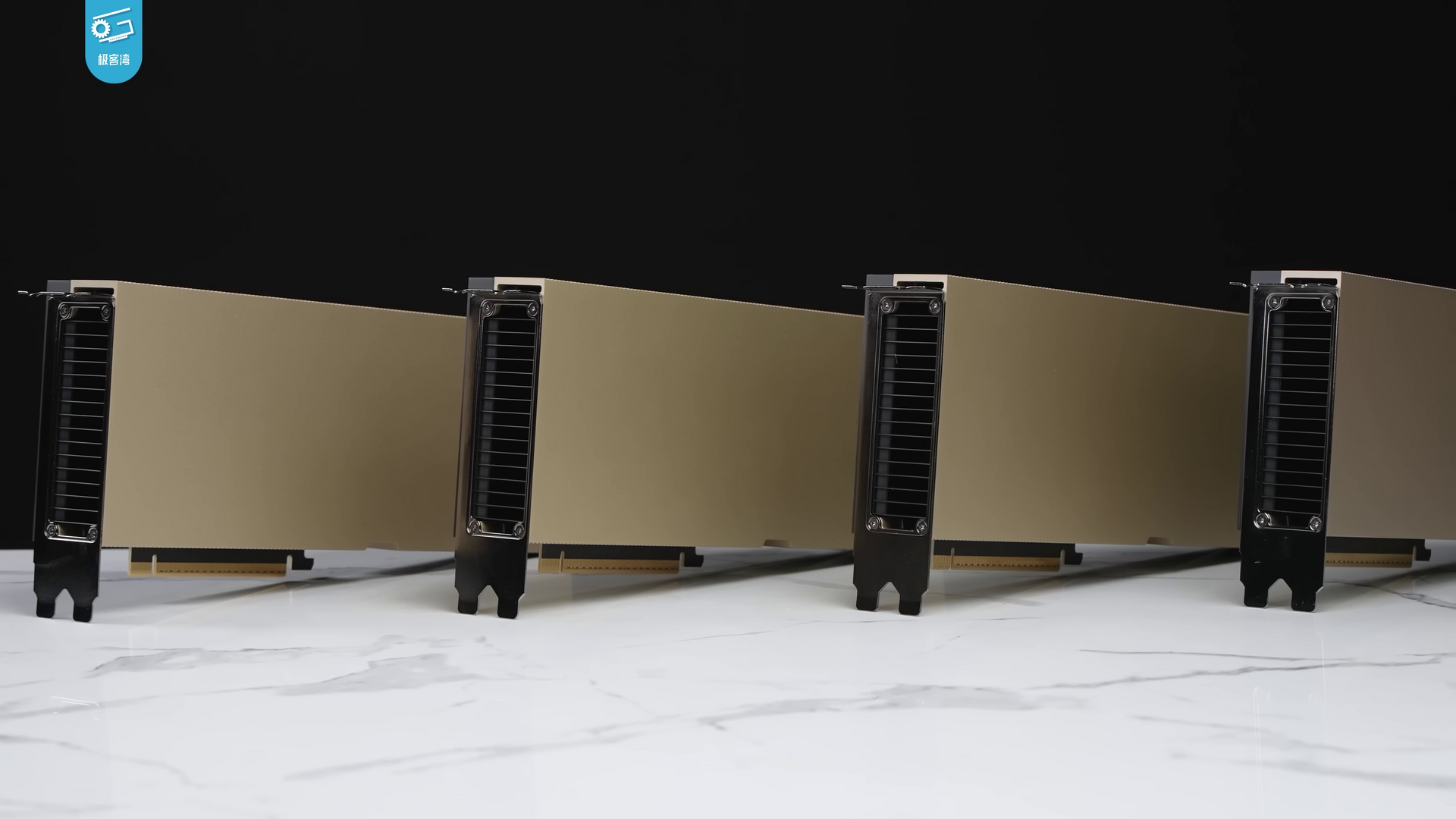
Cover photo: Nvidia H100 PCIe data-centre GPUs. Photo by 极客湾Geekerwan, CC BY 3.0, via Wikimedia Commons.
Questions readers ask
- What is Etched's valuation?
- Etched was last valued at $21 billion after a $700 million round led by Jane Street, announced on August 18, 2026. TechCrunch reported on October 5 that it is now fielding offers at $40 billion to $50 billion, though the talks are preliminary and no deal has been announced.
- What does Etched make?
- Etched builds complete AI inference systems around its own silicon: a prefill chip that runs at low voltage to pack in more compute, and a “cluster-scale memory” system that lets many chips share one fast memory pool for decode. The chip is made on TSMC's N4P process.
- Who are Etched's customers?
- Quant trading firm Jane Street is Etched's first customer; it received a rack in July 2026 and also led the company's latest funding round. Etched says it has more than $1 billion in contracts across frontier AI companies and cloud providers but has not named the others.
- Is Etched's chip only for transformer models?
- Not any more. Etched originally pitched Sohu, a chip built only for transformer models, but now sells inference clusters that it says can run any frontier model, including mixture-of-experts models such as DeepSeek and Qwen and non-transformer designs such as Mamba.
- Who founded Etched?
- Etched was founded by Gavin Uberti and Chris Zhu, with Robert Wachen as co-founder and chief operating officer. The company has about 400 employees, roughly 15% of whom previously worked at Nvidia, according to TechCrunch.
+ Sources
- TechCrunch — Etched fields funding offers at $40B+ valuation, sources say
- TechCrunch — Etched's valuation doubles to $21B in a month
- The Next Web — Etched raises $700M at a $21B valuation led by Jane Street
- Pulse 2.0 — Etched raises $700 million at $21 billion valuation as customer contracts top $1 billion
- Fudzilla — Etched bets the farm on inference
- W.Media — Nvidia licenses Groq's tech for AI inference in US$20 billion deal
- Engadget — Jalapeño is the first AI chip from OpenAI and Broadcom
- Computing — TSMC warns Nvidia and Broadcom of capacity squeeze as AI chip demand surges
The Weekly Diff launches soon.
Follow via RSSKeep reading